

EuroTeQ Collider winter semester 22/23
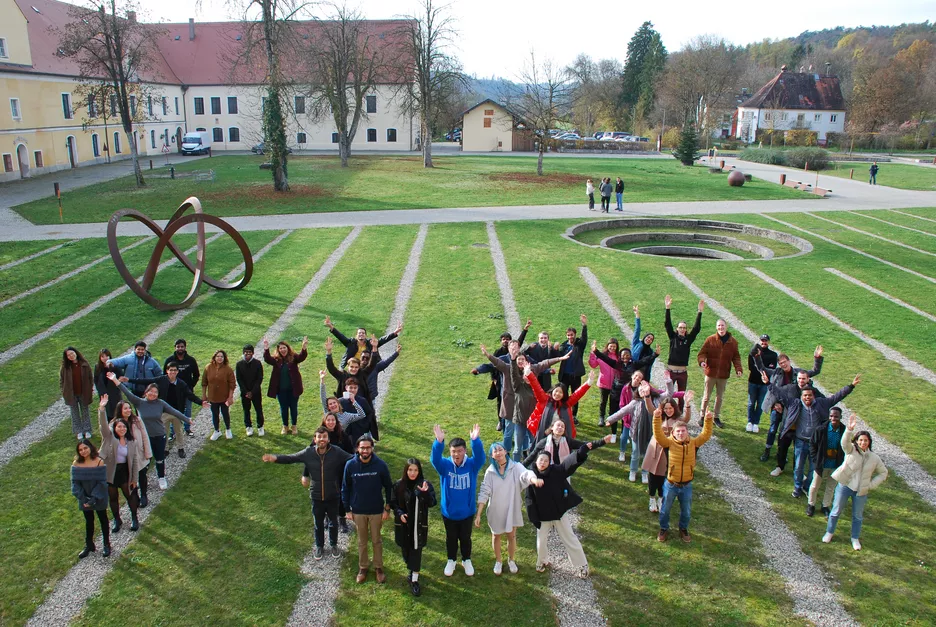
In fall 2022, the second EuroTeQ Collider started at TUM.
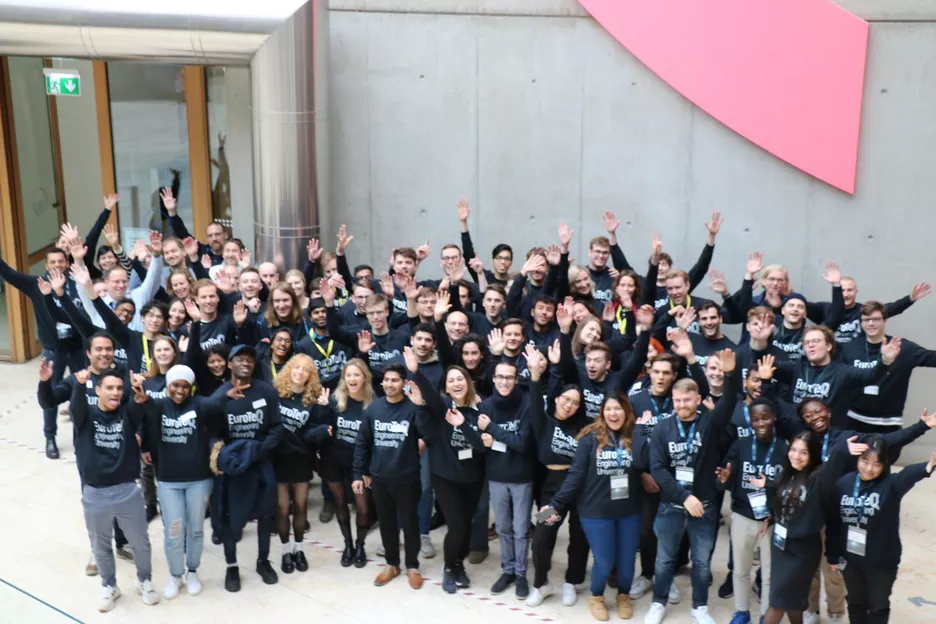
The second EuroTeQ Collider at TUM has finished. During the project weeks, the students worked on 12 exciting challenges related to the topic of "Leave no waste behind" and developed fascinating projects. Part of the project weeks was an intensive working weekend in Raitenhaslach, where all groups worked on their projects, finalized ideas, and practiced their pitches.
We thank all challenge collaborators and mentors for their outstanding commitment and support. Without them, the EuroTeQ Collider would not be possible!
The final presentations of the second Collider took place on 18 November 2022. Three winning teams at the TUM level in the categories CITIES, ENERGY, and CONSUMPTION have been selected to present their projects at the European level, the EuroTeQaThon.
Challenge Collaborator
Dr. Thilo Becker, ENVELON
What was the Challenge?
The initial Name for our Challenge was “Sustainable Self-Sufficient Communities based on Renewable Energy, “ and was proposed by the Company Envelon and our later mentor, Thilo Becker. The company is an industry-leading developer and producer of vertical photovoltaic panels for facade applications. The problem definition seems relatively straightforward: We aim to contribute to the switch to renewable energy, which is so desperately needed to tackle the challenges of climate change. It was clear from the outset that we would use Envelon panels in our concept, along with other renewable energy sources. The fundamental idea of our solution is to develop a self-sufficient community that can produce, store, and trade its own energy. By creating such a community, we aim to develop solutions to various problems caused by climate change. While doing so, we aimed to develop a concept that would shape the social, economic, and technological dimensions of sustainable development. We carefully analyzed the most significant challenges communities face due to the adverse effects of climate change. We concluded that communities are highly affected by low energy security and economic instability (UN Development Goals, 2015). The two essential elements of our solution are securing energy production by enabling communities to generate and store their own energy, and creating economic value for communities through the trading of the energy they produce. Research shows a significant link between providing safe and stable renewable energy to communities and their development. By conceptualizing renewable energy production at the community level, we aim to enhance the economic development of the Olympic Village while increasing the share of renewable energy in the energy grid.
Our concept encompasses three main areas: production, storage, and trading of renewable energy. The production of renewable energy enables the enhancement of decentralized energy production methods, which is seen as a vital element for sustainable development. Battery storage and power-to-heat storage systems allow the produced energy to be utilized for additional purposes, as renewable energy is not a stable source of energy. With the energy produced, residents of the Olympic Village will also be able to charge their e-bikes and e-cars, with smart charging included as part of our concept. Lastly, by trading the surplus energy, we aim to enhance the economic development of students living in the Olympic Village. To measure the energy that can be generated by installing facade and roof PV at the Olympic Village, we used Google Earth, GeoPortal Bayern, and the JRC Photovoltaic Geographical Information System (PVGIS) of the European Commission.
Challenge Collaborator und Mentor
Abdelgafar Ismail, Infineon
What was the Waste Challenge?
Insentify offers an innovative solution for alternative waste management. In partnership with Infineon Technologies, the project proposes using semiconductor sensors to optimize waste-collection routes in cities. The solution comprises four main elements: a sensor module, a web platform, route optimization, and a citizen app. This project targets the current inefficient waste collection in cities, where waste bins are typically collected on predetermined schedules regardless of container fill level, resulting in long travel distances and stopping times for trucks, high fuel consumption, high operational costs, and CO2 emissions.
The sensor module consists of an infrared, humidity, multi-gas, and temperature sensor, which measure the fill level of the waste bins and other key quality parameters important for waste collection. The web platform provides real-time bin status and waste analytics reports, including the percentages of different types of waste, the amount of garbage collected on other days, and expected future trends in waste generation and collection. These data enable route planning and optimization; the system recognizes bins with an 80% filling level and displays them in red on the map. The route-planning system will only consider those spots and generate a new, optimized route that passes through all the full bins. Finally, the citizen app serves as a communication tool between waste management companies and citizens, providing information on schedule changes, the location of nearby public bins, and sorting instructions.
This solution aims to be innovative, robust, easily implementable, scalable, and systemic, with sustainable use of raw materials, energy, and resources. The sensor module can be adapted to any current container system offered by the cities, and different sensor types can be provided to meet various needs. Therefore, the project requires low capital costs and materials for implementation. The implementation of this solution supports the development of smart cities by enabling sustainable waste collection and transportation management, thereby reducing the use of non-renewable resources, fuel consumption, overall costs, and GHG emissions.
The project is a multidisciplinary concept that requires stakeholder support across programming, semiconductor sensors, server or cloud storage, machine learning, and product assembly. The next step in the project is to collaborate with private waste collection companies and initiate a pilot project in smaller cities. Once the pilot project achieves success, Insentify will promote the innovative waste collection system to other cities and countries.
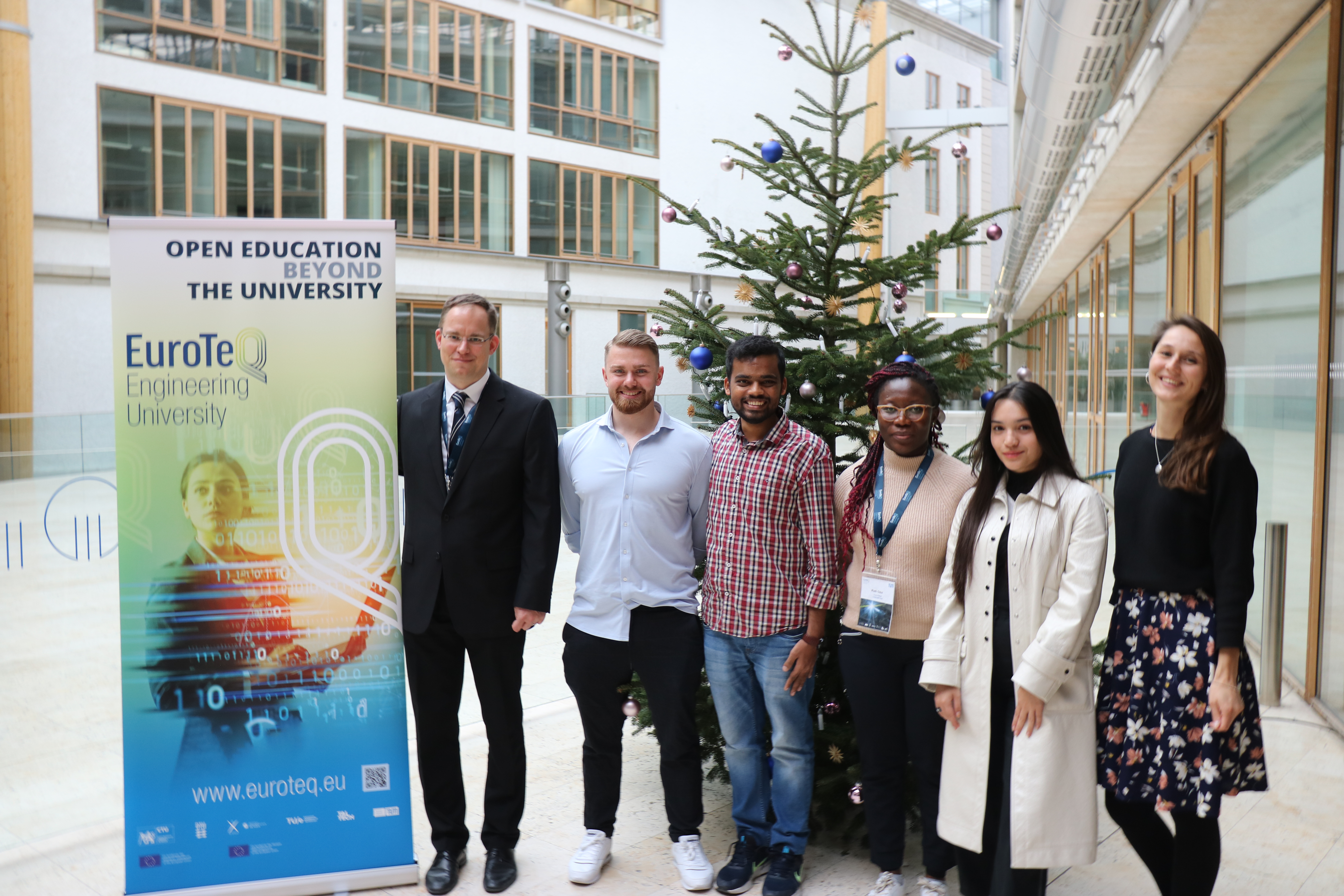
Challenge Collaborator and Mentors
Christoph Dietrich und Martin Weiß, STABL Energy
What was the waste challenge?
The “three R’s” of solid waste management, which involve reduce, reuse, and recycle, are critical in recent times to conserve natural resources and the environment; thus, reducing solid waste at the source and avoiding waste generation. Our challenge, facilitated by STABL Energy, primarily involves the reuse of Electric Vehicle (EV) batteries to bridge the gap between the demand and supply of second-life battery users and EV car manufacturers.
REBATT is a sustainable initiative that seeks to find additional use for end-of-life batteries by leveraging a virtual market to connect individuals who have no use for their batteries with manufacturers that wish to recycle their EV batteries. Our goal was to find another use for end-of-life EV batteries.
It is estimated that by 2030, over 2 million tonnes of EV batteries will reach the end of their life. The need to find an alternative purpose or use for the 20% of the power capacity in these batteries is essential in recent times. After the useful life of the EV batteries, manufacturers have options for recycling, disposing of, or reusing them. The latter, which current studies suggest, reduces the virgin natural resources used in manufacturing, thereby reducing the amount of battery waste produced.
As a virtual platform, we aim to provide quality checks that primarily involve monitoring battery cells, pack charging, and ensuring battery safety. Furthermore, logistics companies with the necessary knowledge and expertise will be outsourced to collect, handle, and temporarily store end-of-life EV batteries before sending them to customers for reuse. Additionally, thoroughly used second-life EV batteries will be collected by the second-life user and then transported back to the manufacturer for reuse.
We would also like to add that the current policies need to be refined, with Second Life battery use added to the sustainable life cycle of an EV battery. We, REBATT, believe that the efficient implementation of the project will reduce battery storage's carbon emissions by 70%, as noted by Stabl Energy.
EuroTeQaThon: November 23 - 25, 2022
The EuroTeQaThon is the highlight of the EuroTeQ Collider and concludes the project weeks of the challenge-based teaching format in an international event of all six partner universities. TUM was the host of the second EuroTeQaThon, and thus the winning teams from the five partner universities in Paris, Eindhoven, Tallinn, Prague, and Copenhagen came to Munich. The aim of the joint event at the European level is to promote exchange between students from different universities, further develop concepts, and compete in an international context.
You can watch the stream of the grand finale on Friday, November 25, which includes the presentations of projects, the final ceremony, and the announcement of the overall winner.
These were the Challenges in the WS 22/23
These were the challenges and mentors our students could choose from.
Live with people you vibe

Introduction
The cities of tomorrow will consist of less individual ownership and will have to offer a wide range of shared assets, including lifelong opportunities.
Problem Definition
The future of living is already here - living with roommates, connecting with other people in shared apartments in your house & city, there is so much possible! However, it is challenging to find the right people to live with.
What is the Waste Challenge?
One of the key components of saving resources is shared living space, which already consumes significantly fewer resources than any other way of living, but there is still room for improvement. What is crucial here is the social aspect. None of the different concepts is working; all creatives and architects will fail if we don't create a social network behind the cities and shared economy of tomorrow.
- How will social sharing of living space save even more resources?
- What is the vibe between people, and how do we help them find each other?
- Think about a community of shared apartments -how are they saving resources together?
Who is behind this challenge?
We are heyroom a startup / digital platform that connects people who are willing to share their living space. www.heyroom.app
Desired Impact
To create change, we need to find a way to bring people with a similar mindset together and bring joy into every individual's life, so that we don't waste their most precious resource: their time. #nozweckwg
Skills needed/recommended
The module is open to everyone.
Relevant considerations for the challenge/theme
We look forward to maintaining regular contact throughout this challenge and engaging in stimulating discussions.
Relevant links
Download the challenge description as pdf
Waste Management in Meropolitan Lagos, Nigeria
Introduction
The world is facing global transformational trends, including population growth, economic development, climate change, and a continual increase in demand for water, energy, and food, all under pressure to support and meet people's needs. According to the United Nations' estimates, the world population is expected to reach approximately 10 billion by 2050 (World Population Prospects, 2015), thereby increasing global demand. The population was estimated at 200 million, and migration to big cities affects urban living, increasing everyday competition for resources (Omololu & Lawal, 2013). Urban centers, such as Lagos, often face inadequate infrastructure, increased traffic, and a higher generation of human and industrial waste. One of the challenges facing any metropolitan area, due to urbanisation and population growth, is waste management in urban centres, as populations can generate large amounts of solid waste. With this background in mind, the study examines how waste can be effectively managed while considering the impact of population growth.
Problem Definition
The challenges of waste management have become a significant issue in Lagos, requiring substantial capital investment. The state is one of the world's six megacities, with a population exceeding 20 million. The state and its citizens consistently fail to manage their waste effectively due to a lack of commitment to integrated waste management strategies, including sorting, reducing waste, and recycling.
What is the Waste Challenge?
Some of the identified waste challenges include improper collection systems, inadequate waste collection equipment (e.g., vehicles), indiscriminate waste dumping, poor implementation of government policies, and ineffective municipal solid waste recovery and recycling practices. In addition, research is needed on how to generate clean energy from these wastes, raising questions such as whether the energy generated will be sustainable and what stakeholders' roles are in such projects.
Who is behind this challenge?
Applicant: Bamgboye Taiwo Temitope (MSc Environmental Engineering)
Other stakeholders are the Lagos State Waste Management Authority and the University of Ibadan, Nigeria, Department of Sociology.
Desired Impact
To raise awareness of waste management, the Lagos metropolis's growing population needs to be informed about effective ways to manage waste. Additionally, to establish an effective public-private partnership to address the social issue.
Skills needed/recommended
Critical thinking, policy analysis, and an affinity for countries from the global south.
Relevant considerations for the challenge/theme
We look forward to maintaining regular contact throughout this challenge and engaging in stimulating discussions.
Relevant links
Download the challenge description as pdf
Download the challenge presentation as pdf
Omololu, F.O., & Lawal, A.S. (2013). Population Growth and Waste Management in Metropolitan Lagos. The Nigerian Journal of Sociology and Anthropology, 11(2). https://doi.org/10.36108/njsa/3102/11(0260)
System Generation for Smart Waste Collection
Introduction
The rapid pace of development in cities and countries over the last few decades has been accompanied by increased resource consumption. While consuming these resources, we often overlook that we are using far more than our Earth can sustainably provide. According to the PACE (Platform for Accelerating the Circular Economy), only 8.6% of our consumption is cycled back from the 100 billion tons of raw materials annually. Poorly managed waste that contaminates land and oceans poses a significant threat to both the environment and human health. Recent findings indicate that humans, on average, may ingest up to 5 grams of microplastics per week, which weighs approximately the same as an average credit card found in everyone’s wallet.
With the technological advancements of the last century, semiconductors have become an essential part of the information revolution, reshaping our society. Modern society would not exist without this vital resource. Moreover, semiconductors are fundamental to many sustainability solutions, including automation, innovative infrastructure, electrification, virtualization, and mobility.
Problem Definition
Solid waste management, also known as municipal waste management, is a crucial component of planning sustainable and inclusive cities for communities. Waste management accounts for approximately 5 percent of total global greenhouse gas emissions, which may be attributed to insufficient waste collection, inadequate waste disposal, and/or inefficient waste-burning practices. Moreover, waste management can be the single highest budget item for many local administrations. Municipalities in low-income countries spend approximately 20 percent of their budgets on waste management, yet over 90 percent of waste in these countries is still openly dumped or burned. Waste collection is a crucial and fundamental step in overall waste management. Collection strategies may vary depending on the geography, population, income levels, and many other factors. The primary objective of a waste collection strategy is to collect waste in a timely and economical manner, thereby facilitating subsequent waste sorting and/or treatment, and maximizing reuse and recycling to support the circular economy.
What is the Waste Challenge?
According to the book "What a Waste 2.0," published by the World Bank Group, annual municipal waste generation worldwide is approximately 2.01 billion tons and is expected to steadily increase to 3.40 billion tons by 2050, according to their waste generation projection. To cope with this immense amount of waste generation, we need advanced waste collection strategies. How can Infineon products and services be utilized to enable digitalization in waste management, particularly in waste collection strategies?
- What is the status of municipal waste collection? (e.g. current status + market research)
- How can the municipal waste collection be established, enabled, and strengthened with technologies using semiconductors? (e.g. robotics, sensors, AI, IoT, Deep Learning, Quantum computing, Big data)
- What are the strengths, weaknesses, opportunities, and threats of the waste collection system you suggested, and how can the risks be managed?
- What are the environmental, social, economic, and governmental implications of your waste collection?
Who is behind this challenge?
Infineon Technologies AG is a world leader in semiconductor solutions that make life easier, safer, and greener. Infineon's microelectronics are the key to a better future. With approximately 50,280 employees worldwide, Infineon is the bridge between the real and digital worlds. In the fiscal year 2021, Infineon reported revenue of more than €11 billion. Municipalities: Household waste collection and recovery are mainly governed by municipal ordinances.
Desired Impact
The proposed outcome is to develop a potential connected solution that covers different aspects, including:•: • Health and Well-being: Improvement of overall well-being and creation of safe working conditions.
- Biodiversity: Preserving the variety of life that can be found on the earth.
- Climate Protection: Reducing greenhouse gas emissions.•Food and Water: Increasing access to healthy food and clean water.
- Energy and Mobility: Ensuring access to energy and the ability to get around.
- Resilience: Building people’s capacity to survive or even thrive in the face of disruption.
- Jobs and Livelihoods: Providing meaningful work and building assets in a community.
The proposed solution to the challenge is also expected to align with the UN Sustainable Development Goals (SDGs).
- GOAL 3: GOOD HEALTH AND WELL-BEING: Ensuring healthy lives and promoting the well-being of all at all ages is essential to sustainable development.
- GOAL 6: CLEAN WATER AND SANITATION: Clean, accessible water for all is an essential part of the world we want to live in.
- GOAL 7: AFFORDABLE AND CLEAN ENERGY: Ensuring access to affordable, reliable, sustainable, and modern energy for all to accomplish continuous development
- GOAL 9: INDUSTRY, INNOVATION AND INFRASTRUCTURE: Investments in infrastructure are crucial to achieving sustainable development.
- GOAL 11: SUSTAINABLE CITIES AND COMMUNITIES: There needs to be a future in which cities provide opportunities for all, with access to basic services, energy, housing, transportation, and more.
- GOAL 12: RESPONSIBLE CONSUMPTION AND PRODUCTION: Assurance of sustainable consumption and production patterns
- GOAL 13: CLIMATE ACTION: Taking action for climate change and its impacts
- GOAL 15: LIFE ON LAND: Protecting, restoring, and promoting sustainable use of terrestrial ecosystems, managing sustainably forests, combating desertification, and halting and reversing land degradation and halting biodiversity loss
- GOAL 14: LIFE BELOW WATER: Careful management of this essential global resource is a key feature of a sustainable future.
Skills needed/recommended
An interdisciplinary team approach is encouraged. People from diverse academic backgrounds are expected to contribute to the common goal.
Relevant Considerations for the challenge/theme
In this challenge, the term ‘technology’ primarily refers to semiconductor-embedded electronics, including robotics, AI, IoT, deep learning, quantum computing, big data, and sensors. When proposing a solution, a business impact assessment should also be considered alongside technological and innovative aspects.
Relevant links
Download the challenge description as a PDF
Download the challenge presentation as a PDF
Applications of Infineon semiconductors
Infineon Sustainability Report
European Environment Agency –Digital Technologies on Waste Management
What a Waste 2.0: A Global Snapshot of Solid Waste Management to 2050
Standardization of Renewable Energy Solutions for Quarters to speed-up the Heat Transition in Cities

Introduction
The City of Munich aims to be climate-neutral by 2035. The Energy Transition in Cities, especially the transition to cover heat demand, is a key to achieving this goal. This has become even more important since the security of energy delivery and independence from imports are now in focus. Now, the City is developing a heat transition plan. One key element of it is expanding and decarbonizing the district heating network. However, this will not meet the entire city's heat demand. Up to half of the city's heat demand must be met by decentralized energy supply, primarily through efficient heat pump systems or waste heat solutions. Hence, at locations without a connection to the district heating system, homeowners should consider replacing their heating systems, for example, with heat pumps. Nevertheless, the most significant impact is seen in providing independent energy solutions for Quarters, for instance, through so-called 5th-generation grids, which are small grids operating at low temperatures, providing heat and cooling for the quarter. These grids are, in general, individually designed and require significant planning effort. However, to reach climate goals and heat transition aims, a rapid and successful implementation of such grids in the city is necessary; therefore, this process should be accelerated and simplified.
Problem Definition
To achieve the city's climate goals and facilitate a rapid transition from heat, swift action is necessary. Therefore, the implementation of climate-friendly energy solutions for urban quarters must be accelerated. I could achieve this. simplifying and standardizing the installation procedures of 5th-generation grids and house refurbishments. Some activities in this direction already exist, but I haven't found any reasonable solutions. In practice, the individual design of such energy supplies for quarters takes a long time to plan and implement, which slows the energy transition.
What is the Waste Challenge?
The first step in this activity is to evaluate renewable energy solutions for quarters, especially 5th-generation grids (low-temperature grids), and identify their similarities and differences. The challenge is to take this analysis and develop a tool or guideline for easy-to-implement standardization of such solutions for serial implementation, considering city requirements and aiming to maximize CO2 savings to accelerate the energy transition in Cities.
- Is it possible to simplify good practice renewable energy solutions for quarters for a fast implementation?
- Are low-temperature grids also possible for the building stock?
- How much is the potential loss of CO2 savings for such ‘serial solutions’, and is this acceptable?
- Could a stepwise implementation without a strong negative aspect for the investors be a reasonable way?
- How can a standardized renewable energy solution for quarters be implemented in energy action planning tools?
Who is behind this challenge?
The Geothermal Group of the Chair of Hydrogeology focuses on renewable energy, particularly in geothermal energy supply, and exploring best practices for implementing shallow geothermal low-temperature grids. In this field, we develop tools for energy action plans, including those related to geothermal potential, and participate in several municipal and regional heat transition activities, such as the Munich heat transition planning. Here, we work closely together, e.g., with the Department of Climate and Environment of the City of Munich, Stadtwerke München, the Environmental Agency of Bavaria, the Company Enanio, planners, and other stakeholders at various levels.
Desired Impact
As a result, cities such as Munich and planners like Stadtwerke München can accelerate the heat transition in the city. The use of the vast potential of efficient low-temperature grids will be considerably fostered by integrating low-temperature grid solutions into energy planning tools. Relevant stakeholders will be informed of the existence of such solutions and advised to implement low-temperature grids.
Skills needed/recommended
Generally, knowledge of renewable energy technology and climate-friendly construction practices is an advantage for addressing this challenge.
Relevant considerations for the challenge/theme
It would be beneficial to evaluate existing renewable energy solutions for quarters and low-temperature grids to identify similarities and differences. For this activity, it is recommended to gather information on research projects or examples from Associations such as the Bundesverband Wärmepumpen, the Bundesverband Geothermie, etc., and planners (Baugrund Süd, Geoenergie Konzept, etc.).
Relevant links
Download challenge description as pdf
www.energynet.de/2018/01/17/kalte-nahwaerme/
ee-ip.org/de/article/was-ist-kalte-nahwaerme-5862
www.durchblick-energiewende.de/wissen/energie/kalte-nahwaerme-waermenetze-der-zukunft
www.geothermie.de/bibliothek/lexikon-der-geothermie/n/nahwaerme-kalte.html
blog.paradigma.de/grundlagenwissen-waermenetz-teil-4-was-ist-ein-kaltes-waermenetz/
Sustainable Self-Sufficient Communities based on Renewable Energy (Energy/Cities)

Introduction
Global heating is one of the most urgent challenges we currently face as a society. Greenhouse gases, such as CO2 and Methane, are the main drivers of climate change. Over 73 % of the world’s global greenhouse gas emissions stem from the energy sector. Within this, transportation and buildings are responsible for over 32 %. The creation of more sustainable communities based on renewable energy presents a significant opportunity to address global greenhouse gas emissions and, consequently, mitigate the phenomenon of global warming.
Problem Definition
In contrast to nuclear or coal-fired power plants, the energy generated by renewable sources such as wind power or photovoltaics (solar energy) is not constant over time. Photovoltaic systems, for example, can only generate electricity during daylight hours. This not only puts the stability of the power grid at risk, but also means that these renewable energy technologies require additional infrastructure to provide a reliable power supply throughout the day. Some technical solutions already exist to counteract this phenomenon. Vertical photovoltaic systems, for example, can generate electricity more uniformly throughout the day and even throughout the year compared to conventional photovoltaic systems. As solar panels produce the most electricity when the sun is directly perpendicular to the panel, vertically installed panels are particularly effective in the mornings, evenings, and during winter. Conventionally installed panels have a significantly stronger peak production in summer and in the middle of the day. Energy storage systems can also be used to temporarily store excess production.
What is the Waste Challenge?
Your challenge is to develop a concept for a smart community featuring energy self-sufficiency and suitable storage and distribution systems for renewable electricity.
- How can innovative renewable energy concepts, such as solar facades, be leveraged as enablers of self-sufficient sustainable communities?
- What could an innovative network within a self-sufficient community look like? How can we enable a stable storage and distribution solution for electric energy?
- What regulatory and societal challenges could one face during the realization of smart self-sustainable cities?
Who is behind this challenge?
ENVELON offers an innovative system for solar active façades under the umbrella of the multinational Grenzebach Group. Since its founding, a team of experienced experts from various fields, including automation and the glass and solar industries, has been working together on a shared vision: to provide Germany, Europe, and the world with technology that will enable the long-term generation of sustainable energy directly on buildings. In this context, we blend tradition and innovation to deliver products and services of the highest quality and performance –we deliberately produce our façade panels in Hamlar, in the Donau-Ries region of Bavaria. As a family business with strong convictions, we are therefore bringing the solar industry back to Germany and offering a flexible system “Made in Germany” –combined with an experienced and highly skilled network of international partners.
Desired Impact
The challenge aims to generate innovative concepts for smart, self-sufficient cities, serving as inspiration for various projects in the fields of renewable energy and urban planning.
Skills needed/recommended
Any background from engineering to sociology is suitable for this project. We are seeking a diverse team with a mix of technical and non-technical backgrounds.
Relevant considerations for the challenge/ theme
The challenge should focus on available renewable technologies, in particular photovoltaic energy.
Relevant links
Download the challenge description as pdf
Download the challenge presentation as pdf
ENVELON | Solar-active facades from Germany
Dr.-Ing. Thilo Becker: thilo.becker@grenzebach.com
Background on the Energy supply and demand: https://energy-charts.info/
Background for building integrated PV (German only): Allianz-BIPV-Info-Broschüre-final.pdf
Innovative Solar Energy Concepts for a Stable Electricity Grid
Introduction
Global heating is one of the most urgent challenges we currently face as a society. Greenhouse gases, such as CO2 and Methane, are the primary drivers of climate change. Over 73% of the world’s greenhouse gas emissions stem from the energy sector. Within this, transportation and buildings are responsible for over 32 %. The creation of more sustainable communities powered by renewable energy presents an enormous opportunity to address global greenhouse gas emissions and, consequently, global warming.
Problem Definition
In contrast to nuclear or coal-fired power plants, the energy generated by renewable sources such as wind power or photovoltaics (solar energy) is not constant over time. For example, photovoltaic systems can only generate electricity during daylight hours. Feed-in tariffs encourage operators of photovoltaic systems to generate as much electricity as possible, regardless of the grid's load. Large photovoltaic power plants are therefore typically built to face southwards to optimize the total energy yield throughout the day. Especially in the summer, this leads to overproduction around noon and a very low share of solar electricity in the morning and evening, as well as in winter.
Solarfaçades differ from such photovoltaic power plants, as the solar panels are arranged vertically, maximizing their output during times when the sun is low on the horizon. This occurs in winter, as well as in the mornings and evenings. While the overall power output is thus lower than that of a conventional photovoltaic power plant, the energy is produced more evenly throughout the day and year. This reduces stress on the electricity grid and enables direct energy use within a building. However, current incentives for renewable energies, such as feed-in tariffs, do not promote this highly sustainable way of photovoltaic energy production.
What is the Waste Challenge?
Your challenge is to develop a policy paper to promote photovoltaic power plants and solar facades optimized for homogeneous energy production and a more stable grid.
- What incentives could be used to promote solar facades?
- How do typical load profiles in a building/city/country compare to the output of a conventional photovoltaic power plant and a vertical photovoltaic system, such as a façade?
- What would be the ideal mix of conventional photovoltaic power plants and vertical photovoltaic systems, such as façades?
Who is behind this challenge?
ENVELON offers an innovative system for solar active façades under the umbrella of the multinational Grenzebach Group. Since its founding, a team of experienced experts from various fields, including automation and the glass and solar industries, has been working together on a shared vision: to provide Germany, Europe, and the world with technology that will enable the long-term generation of sustainable energy directly on buildings. In this context, we blend tradition and innovation to deliver products and services of the highest quality and performance –we deliberately produce our façade panels in Hamlar, in the Donau-Ries region of Bavaria. As a family business with strong convictions, we are bringing the solar industry back to Germany and offering a flexible system “Made in Germany” – combined with an experienced, highly skilled network of international partners.
Desired Impact
The challenge aims to produce a policy paper and provide guidance on the use of vertical photovoltaics to advance more sustainable renewable energy.
Skills needed/recommended
Any background from engineering to sociology is suitable for this project. We are seeking a diverse team with a mix of technical and non-technical backgrounds.
Relevant considerations for the challenge/theme:
The challenge should create a strong summary of the current situation, provide recommendations for improved future utilization of solar facades, and ultimately propose a policy paper to promote vertical and other photovoltaic systems optimized for a stable grid and energy supply.
Relevant links
Download the challenge description as pdf
Download the challenge presentation as pdf
ENVELON | Solar-active facades from Germany
Dr.-Ing. Thilo Becker: thilo.becker@grenzebach.com
Background on the Energy supply and demand: https://energy-charts.info/
Background for building integrated PV (German only): Allianz-BIPV-Info-Broschüre-final.pdf
Reducing Packaging Waste from Photovoltaic Solar Panels (Consumption)
Introduction
Global heating is one of the most urgent challenges we currently face as a society. Greenhouse gases, such as CO2 and Methane, are the primary drivers of climate change. Over 73 % of the world’s global greenhouse gas emissions stem from the energy sector. Within this, transportation and buildings are responsible for over 32 %. The creation of more sustainable communities based on renewable energy presents a significant opportunity to address global greenhouse gas emissions and, consequently, mitigate the phenomenon of global warming.
Problem Definition
Building Integrated Photovoltaics (BIPV) play a key role in future renewable energy generation. Solar facades, in particular, can form an integral part of the building while producing electricity throughout the day. Current packaging systems for transporting PV modules to building sites are either single-use or reusable. Reusable packaging is durable and generally provides good protection from the elements (wind, rain, etc.). However, it is also expensive, and the logistical hurdles for returning it to the PV module producer for reuse are complicated and costly. Often, reusable packaging is discarded after only a few uses due to insufficient logistics and return options. Although cheaper, single-use packaging offers little protection against the elements (such as wind and rain) on a building site and generates large volumes of waste.
What is the Waste Challenge?
- Your challenge is to develop a novel packaging design for BIPV façade modules and a corresponding business model.
- How can the packaging be made more sustainable?
- What could a return infrastructure for BIPV packaging look like?
- What materials are most suitable for reusable packaging?
- How can the durability of reusable packaging be improved?
- Can redesigned single-use packaging be a sustainable alternative?
Who is behind this challenge?
ENVELON offers an innovative system for solar active façades under the umbrella of the multinational Grenzebach Group. Since its founding, a team of experienced experts from various fields, including automation and the glass and solar industries, has been working together on a shared vision: to provide Germany, Europe, and the world with technology that will enable the long-term generation of sustainable energy directly on buildings. In this context, we blend tradition and innovation to deliver products and services of the highest quality and performance –we deliberately produce our façade panels in Hamlar, in the Donau-Ries region of Bavaria. As a family business with strong convictions, we are bringing the solar industry back to Germany and offering a flexible, “Made in Germany” system – combined with an experienced, highly skilled network of international partners.
Desired Impact
The challenge aims to design a prototype packaging system and, for reusable packaging, develop a return system from the building site to the PV-module producer.
Skills needed/recommended
Any background from engineering to sociology is suitable for this project. We are seeking a diverse team with a mix of technical and non-technical backgrounds.
Relevant links
Download the challenge description as pdf
Download the challenge presentation as pdf
ENVELON | Solar-active facades from Germany
Dr.-Ing. Thilo Becker: thilo.becker@grenzebach.com
Does battery recycling compete with second-life usage? (Energy)

Introduction
STABL Energy strives to promote sustainable energy use through its power conversion technology. Our goal is to increase the deployment of energy storage for renewable energy by setting a new standard for battery storage. With our easy-to-integrate technology, we improve the design, safety, reliability, cost-effectiveness, and handling of battery storage systems.
Problem Definition
Battery recycling not only serves the purpose of improving the sustainable use of resources but is also a strategic topic for car makers to decrease their dependency on countries that provide these resources. Recycling is one option to control resources and ensure the supply of materials needed to produce batteries in the future. This objective may conflict with the re-use of batteries for second-life applications.
What is the Waste Challenge?
A possible question is whether the resources required in today's battery chemistries will remain relevant for the next generation of battery technology. Cobalt, for example, is continuously losing its share in batteries and may not be used at all in the future. Completely new battery types and chemistries, like solid-state, may work towards or against this trend. The project group may also explore the expected behavior of car manufacturers: reusing batteries reduces the demand for new batteries in electricity-grid applications. For the individual car manufacturer to benefit from this, the entire industry needs to coordinate its efforts. Solo efforts could easily undermine any coordinated action. The project group should provide an overview of all identified factors and current industry trends, and develop recommendations for used batteries.
- Will the resources needed in battery chemistries today still be as relevant for the next generation of battery technology?
- What usage strategy can be expected from distributors of batteries like car manufacturers?
- What factors and trends will need to be defined to coordinate action of the entire industry rather than individual players going it alone?
Who is behind this challenge?
Founded in 2019, STABL Energy is one of the most innovative startups in the energy transition, having won the PV-Magazine Megawatt Award in 2020 and the ees Award in 2022, and been named a global Top 100 Energy Startup in 2021. We are funded by renowned and experienced Tech VCs from Germany and Switzerland. We are united by a shared vision of enabling a climate-neutral energy system through safe, sustainable, and efficient battery storage.
Desired Impact
If used batteries, such as traction batteries for electric vehicles, were reused after their initial use rather than recycled through complex, costly processes, the greater availability and lower costs would make battery storage more attractive. Battery storage is a crucial component of our strategy to mitigate global warming by increasing the use of renewable energy in the electricity grid. Since renewable energies are highly volatile, a buffer is needed to temporally or spatially separate energy production and consumption. Currently, the need for battery recycling is still underestimated, as only a small percentage of batteries have reached the end of their life. This will change significantly in the next few years, as the number of returns of electric cars, electric scooters, or other electric mobility devices is expected to increase substantially. We assume that the players along the cycle from raw material to raw material are currently not sufficiently connected to engage in meaningful political discussions. Once the relevant factors are identified, the right contacts for cross-industry issues can be identified and addressed.
Skills needed/recommended
- You’re a team of 2-3 people studying in the fourth semester onwards;
- You are interested in strategic issues of an innovative high-tech hardware startup;
- You are open to new things and can creatively deal with challenges;
- You have an independent, structured, and systematic way of working;
- Ideally, you are a well-established team that is eager to experiment and has a great passion for providing new impulses.
- You have good English skills; German skills would be excellent to have.
Relevant links
Download the challenge description as pdf
Social innovation towards a sustainable European food system
Introduction
Our food system is broken. Whereas more than half of the planet is overweight, the others starve to death. Food production is linked to GHG emissions, deforestation, resource depletion, soil and water pollution, biodiversity loss, and ocean dead zones, among other impacts. In Europe, standard diets that rely heavily on the consumption of animal products and highly processed foods are detrimental to both the environment and human health.
Within the context of its Farm to Fork Strategy, the European Union seeks to foster positive, transformative change towards a more sustainable and equitable food system. In particular, the EU has called for greater societal awareness of and engagement with the food system, as well as the adoption of more sustainable diets based on low-processed and plant-based foods. However, top-down, market-based, and normative approaches perform poorly in this respect. For this reason, more bottom-up and social approaches to transforming and innovating towards more sustainable and conscious food behaviors are needed. Educating people about food and dietary sustainability, as well as raising food awareness, is crucial in this respect. This includes not only providing quality and unbiased food information but also rethinking and redesigning the food environment, especially for younger generations. In this context, this challenge aims to enable young Europeans to provide an informed answer to the question: Where are your Food Steps leading, and where do you want them to lead?
What is the Waste-Challenge?
When considering food, we are used to thinking of waste as what we may throw away in the biodegradable trash can. However, in this Challenge, we aim to explore the concept of waste from a different perspective. First, food waste also refers to the food that is lost due to an inconsiderate and inefficient use of resources. In this sense, behind some of the foods we consume, there may be an intrinsic waste we are unaware of. Second, consuming food unmindfully and with no awareness of its real value, in a sense, is also a form of waste, as it is careless; this is also linked to actual food waste in its conventional meaning, e.g., we buy more food than we need (because we don't value it) and end up throwing it away.
Considering these two dimensions, the Challenge aims to find innovative ways to empower people to understand, reflect on, and shape their Foodprint. The goal is to increase education on food sustainability on one side, while also reconnecting people with the food they eat and the ways they can contribute to positive change in the food system. The Challenge is highly open-ended, as participants can start by analyzing the context and relevant stakeholders to discuss and explore the best innovative solutions and initiatives to implement, contributing to the goal.
Ideally, the group could build on the work the Foodprint team already did in the last edition of the EuroTeQ Collider. There, the group developed a concept for a Foodprint Canteen, a scalable model for an “empowering canteen” that could be virtually applied to any school/university canteen in Europe.
The concept was based on an approach of information and education by design. The idea is to transform the school or university canteen from a place where you go to consume food into an empowering environment where people can become more connected to and learn about the food they eat, and more generally, about food sustainability. The Foodprint Canteen Model is based on two main pillars:
- Pillar Food Environment: changes in the design of the food environment, especially in the menu design, in ways that make the environmental impacts of different foods clearly visible and understandable. For this pillar, we considered building a Foodprint Calculator to automatically calculate the ecological effect of the dishes served in the canteen. This is accompanied by a color-coded label that will be displayed in the menus to visually communicate the effects to users.
- Pillar Transformative Education: implementing transformative learning in the canteen environment to (re-)educate on dietary sustainability. Transformative learning is based on the idea that you cannot simply inform people as if they were empty containers. Instead, you need to address their existing fears, doubts, and beliefs (specifically, those related to diet and sustainability in this case). We explored the possibility of using the EDx App, an open-source, transformative learning app developed in partnership with the United Nations, to offer smartphone micro-courses to large communities of learners.
- NB: for getting an email with more information (i.e.,mock-ups, last year ́s report or pitch presentation) see contact details below!
Although we were able to work a little more on the first pillar, we did not have the chance to thoroughly explore the second pillar in detail. This could be one area where the project could be expanded. There is indeed much to explore; for instance, a detailed course program could be developed by seeking professionals to participate in its creation. Additionally, considering how to precisely implement the courses in the canteen environment, for instance, by using QR code installations. Additionally, we identified numerous stakeholders last year, as well as potential partners and sponsors. Therefore, in this edition, it could be interesting to contact them and include their perspectives and evaluations of the Foodprint Model, in a proper design-thinking spirit. Additionally, last year we conducted qualitative interviews with canteen users, although they were more general in nature, aimed at understanding their attitudes towards food sustainability and their needs. This time, students could also confront users with a more developed model and get constructive feedback on the user end, in the spirit of co-creation.
Of course, there were many other initial ideas we did not get to explore in the last edition, such as:
- QR-code installations in strategic points (such as waiting lines) that students can scan. These could include information, fun facts, and other relevant details about the menu for that day.
- (An expansion and more sophisticated version of the above) QR-codes to scan for each or some of the foods served that day. These could contain general information about the foods, their production, and the resulting environmental impact, as well as their history, current data, or issues related to them.
- Create an app for canteen users that keeps track of your Foodprint (linked to the Calculator). You can track your progress and share it with others. Given technical capacities, this could be expanded further by elaborating on positive reinforcement mechanisms.
- ..... (This could be you!)
In general, whereas it could be interesting to build on the project of last semester, this is not mandatory. You are not limited by our past work or the directions we took last year. Many other initiatives and projects in the university, online, or in the city are possible, and there are countless options. What initiatives are chosen by the group will, of course, depend much on the preferences of the group and on the type of (technical) expertise and resources available.
Desired Outcome
People eating in the canteen will be empowered and more informed about their food choices, and some might even change their consumption habits. The concepts, solutions, and initiatives elaborated in the project should be flexible and scalable enough to be applied and extended to virtually any university or public institution, adapting them to the relevant contexts and audiences.
Additionally, participants in the Challenge will emerge from this experience feeling enriched and empowered. Additionally, valuable connections and synergies could outlive the project itself, as students may become part of the Foodprint student organization, which is currently in formation.
Desired Impact
Knowledge is power. By recognizing the real impact of daily food choices and behaviors, people can make more informed diet decisions that better align with their values and the future they want to help bring into being. By educating people about food and dietary sustainability, we empower them to become responsible food citizens instead of mere passive consumers. In this sense, we also contribute to enhancing food democracy and laying the groundwork for a more participatory, inclusive, and fair governance of the food system.
How-To-Foodprint
How do we address the problem? To participate in the Challenge, individuals must be open-minded, receptive to dialogue, and willing to critically reflect on their own beliefs and behaviors. The key is to always be respectful of others and be aware that food is linked to culture, traditions, experiences, and memories of the people we love. Even if we ultimately focus on food sustainability and educating food citizens, we should keep in mind that food is also much more than that. The fact that the project group will be highly diverse and international should be our strength, not our weakness.
What is our spirit? What is our communication? We do not want to make people feel judged or overwhelm them with too much or too technical information. We aim to reach people's brains and stomachs, but we actually want to touch their hearts. The communication and spirit behind the initiatives should be positive, empowering, and non-judgmental. This also includes avoiding what I call the “rhetoric of sacrifice”. We are not trying to shame people into “restricting” their behaviors and “giving up pleasures” in the name of higher moral principles. The spirit is not that of “less”, but of “more:” we want to benefit people by educating and empowering them. We want to encourage them to be active and make informed decisions. We are offering, we are not taking away or imposing. We cannot and do not want to force people to adopt more sustainable diets, but we want to enable them to do so by giving them access to quality information/education.
How do we educate? Educating is not equal to informing. While providing information in the strict sense of the term is, of course, a significant part of it, education can take many creative, innovative, and even unconventional forms. Even when we are simply “informing”, the way information is conveyed can vary significantly, with a significant impact on the outcome. This not only includes the communication, but also the form information it takes. We can be absolutely open about this in the Challenge and explore a wide range of media and concepts to convey this information. Everything goes, as long as it is feasible, flexible, and empowering!
Would you like to participate in the Challenge? Do you have any questions, remarks, or comments? Would you like to receive an email with our presentation from last year's pitch, the accompanying report, and a glimpse of our mock-ups of the Foodprint Model?
Do not hesitate to contact us anytime!
Contact details
Giada Severini
giada.severini@tum.de
foodprintchallenge2022@gmail.com
+39 345 1440 764
Recycling of Renewable Energy Waste
Introduction
Sustainability is the megatrend of the 21st century. Currently, the primary focus is on ecological aspects, including combating climate change and adapting to its effects. In this context, the federal government is promoting the expansion of renewable energy sources.
Problem Definition
One aspect that has not been sufficiently discussed so far is the recycling of renewable energies. This is a significant topic that few people have discussed so far, as renewable energies are being built as much as possible for the time being, come what may.
What is the Waste Challenge?
- How are rotor blades from wind turbines, concrete blocks from onshore wind turbines, and solar panels recycled?
- How are these products disposed of so far? How can they be disposed of more sustainably?
- How high is the risk of associated environmental damage? How can circular processes be set up around the recycling of renewable energies?
Who is behind this challenge?
BayernLB is a top commercial bank in Germany and has established itself as a streamlined bank for promising sectors of the German economy. The BayernLB Group is one of the country’s top property financiers and asset managers. Through its Real Estate division, a core business area, the Bank finances property in all asset classes. BayernLB is there for its real estate customers, both in Germany and elsewhere in Europe.
BayernLB is also actively involved in the field of renewable energies. For over 15 years, BayernLB has supported the energy transition by financing solar and wind parks. In 150 transactions, EUR 7.5 billion in investment volume and 4.4 GW of installed capacity were represented worldwide. The electricity produced corresponds to the annual consumption of 2.4 million households. This avoids 3.9 million tonnes of CO2 emissions per year.
Desired Impact
This challenge aims to first get an overview of how renewable energy components are currently disposed of and recycled. Subsequently, it can be analysed how the recycling of renewable energies, subdivided according to the different products, can be set up more sustainably and in line with circular processes. This can lead to approaches for companies on how to design their products more sustainably in the future.
Relevant links
The promising Ricochet Effect
Introduction
Nature has evolved and optimized itself over millions of years through the process of natural selection. Therefore, it represents an abundant source of knowledge and inspiration. Biomimicry is a process of innovation in which the strategies of nature are understood and mimicked to address technical challenges. The gills of the Manta Ray are a great example of such an optimized system. Thanks to the ricochet effect [1], the Manta can filter plankton out of the water efficiently without its gills clogging.
What is the Waste Challenge?
With increasing processing and various recycling options, the subsequent separation of materials and chemicals is becoming increasingly crucial. Filters play an essential role here. Through them, we separate the clean from the dirty, the recyclable from the non-recyclable, or the waste from our natural surroundings. One problem with filters, however, is that they clog and thus become waste themselves at the end of their lifecycle. A characteristic not shared by the filtering gills of the manta ray. Due to the sequential arrangement of the gills, particle-free water can pass through. Hence, the Ricochet Effect is a promising strategy for addressing significant waste issues. However, it introduces new challenges that need to be solved. Since water must flow through the gills/fins, a cycle of dirty water and fresh water is created. Furthermore, flow velocity and flow angle must remain constant or, at the very least, be adjustable. One could try to solve these challenges; however, there are already applications where the difficulties of this solution are not relevant, and the advantages can be utilized. We have the following challenges for you.
- How can the ricochet Effect be used in a technical setting?
- Define a waste problem that could effectively be tackled using the ricochet effect.
- Find limiting factors of the Ricochet Effect, and how one might overcome them.
- How can the Ricochet effect be utilized and expanded upon to tackle current waste challenges we are facing?
Who is behind the challenge?
We are a team of 7 motivated students from various fields of study. Within the TUM: Junge Akademie, we have joined forces to form the team Membrains [2]. The fact that we can all draw so much from the work on our project has motivated us to set this challenge. We are curious about your creative ideas, open input, and potential solutions to the subject we are passionate about.
Desired Impact
The link between the climate-smart agribusiness plan and the WEF Nexus involves using technologies that do not harm the environment. Furthermore, it will raise awareness among the community and local farmers about various methods of food production and processing. It could create a domino effect, leading to capacity development and scaling the system among local farmers.
Relevant considerations for the challenge/ theme
The team is free to use biomimicry in their approach to tackle this challenge. Though the challenge's primary focus should be the ricochet effect, it might be worth looking at other animals or plants for further inspiration. The focus should be on one of the key questions.
Skills needed/recommended
The module is open to everyone, but some skills might be beneficial for our Challenge
- Fundamental understanding of fluid mechanics?
- Engineering fundamentals?
To further investigate the idea, a tutorial on Ansys, a fluid simulation software, will be provided to TUM students. For very eager students, we can provide a testing ground for their built prototype that uses standard tubing and a water pump.
Relevant links
Download the challenge description as a PDF
Download the challenge presentation as a PDF
[1]https://www.science.org/doi/10.1126/sciadv.aat9533
[2]https://www.ja.tum.de/ja/projekte/2022/membrains/
Contact: membrains@ja.tum.de
Tutors: Julius Wenzler (julius.wenzler@tum.de) Laura Gentner: (laura.gentner@tum.de)
Electrification of Aircraft (Energy)

Introduction
Transport energy use is a significant share of each person’s energy consumption. For example, in the UK, it is estimated that on average, 32% of a person’s energy consumption is used for transport.
The electrification of automotive vehicles is well underway, but there is still much to be done to electrify aviation. The required energy density for aircraft often comes from combustion sources, which are not sustainable or environmentally friendly. The electrification of aircraft provides an opportunity for propulsion energy to come from clean, renewable sources. To succeed, you must give clear, quantitative, data-driven conclusions underpinned by the use of rigorous mathematical models and time-domain simulations.
What is the Waste Challenge?
You will use an existing MATLAB®, Simulink®, and Simscape™ representation of an all-electric aircraft as the basis for this project. You will extend this by building models of various aircraft, including those with electrical energy storage and equipment, which enable a thorough evaluation of energy consumption. Use the models to provide informed, data-driven comparisons and recommendations as to the most promising electrical configurations and technologies.
Suggested steps:
- Become familiar with existing electric aircraft models (links below) and use these as the basis for your project.
- Project variations: Choose one of the following project ideas:
- Build or integrate a model of an energy storage system. Consider the weight, size, and efficiency of one of:
- Hydrogen
- Fuel Cell
- Battery
- Other novel sources?
- Use the model to compare the advantages of different distribution systems:
- AC
- DC
- Mixed AC/DC
- Build or integrate a more detailed and representative model of one of these loads:
- Propulsion
- Sensors and electrical actuators
- HVAC
- Galley/Hotel
- Infotainment
- Other areas?
- Build or integrate a model of an energy storage system. Consider the weight, size, and efficiency of one of:
- Calculate expected efficiency and power requirements for a variety of typical flights
- Write up data-driven recommendations to influence each of:
- Individuals – Should the technologies you investigated influence flight purchasing decisions by passengers?
- Industry – Should the technology you investigated be further developed, and why?
- Government – shape government policy to direct investment and multiply the benefits
Advanced project work:
- Pick additional item/items from the project variations above.
- Parameterize the aircraft for multiple configurations: a variety of passenger capacities and numerous geographic locations.
- For comparative purposes, build one model of conventional
- Propulsion, or
- Actuation
Desired Outcome
Show the feasibility of an aircraft energy system leading to lower emission rates, e.g., by optimized energy provision, energy distribution, or energy conversion. This demo will be publicly available on GitHub for the community to further evaluate and deepen their knowledge.
Desired Impact
Contribute to the global transition to zero-emission energy sources by electrification of flight.
Background: In 2018, aviation accounted for 2.5% of anthropogenic CO2 emissions, with projections suggesting up to 5% in 2050. Other aviation emissions (e.g., water vapor, nitrogen oxide emissions, etc.) contribute to climate change, attributing an even higher impact on climate change to aviation emissions (from the 2020 white paper ZERO EMISSION AVIATION, p. 11).
Relevant considerations for the challenge/theme:
This project is to be developed using MathWorks’ tools and made openly available for the community. This will be in the form of demos, simulations, and models.
Relevant links
Download the challenge description as pdf
Download the challenge presentation as pdf
The challenge can be found on GitHub (Electrification of Aircraft) as Part of MathWorks’ Excellence in Innovation Program.
Background Material:
Creating the universities of tomorrow by optimizing lectures with regards to their energy efficiency (Energy)
Introduction
The beginning of the COVID-19 pandemic has rocked universities worldwide, with in-person lectures no longer possible and online lectures becoming a daily routine. Even though in-person education has now been reinstated at several universities, the experience and expertise gained over the past few years in online teaching cannot be ignored. The most significant difference between in-person and online lectures is that transportation has a significant impact on their energy consumption. By optimizing lecture schedules and combining online and on-site lectures, universities could reduce their energy footprint. We have already developed a simple calculator tool, our elecCalc, which allows lecturers and students to calculate the energy consumption of individual lectures. Using this toolkit as a base, we aim to expand on this idea and create a tool that is both easy and convenient to use, yet sophisticated under the hood. Eventually, this calculator could then be routinely integrated into the planning and scheduling of lectures.
What is the Waste Challenge?
By challenging participants to expand their elecCalc and create a tool to plan energy-efficient schedules, we are encouraging them to understand the impact of daily activities on energy consumption and to help others understand it as well. Through our challenge, all stakeholders can understand the impact of transportation on lecture energy consumption and acknowledge the opportunities presented by digitalization. Having built this understanding and acknowledgment, both the challenge participants and future users of the expanded elecCalc can efficiently shape their daily lives to avoid wasting energy, for instance, by reducing unnecessary commuting.
Key questions:
- How can the students' schedules be optimized with the help of the known energy consumption of individual lectures?
- Can the energy consumption of lectures be minimized by creating hybrid lectures where the splitting is based on travel distance?
- What are the key infrastructure components through which the universities themselves can significantly save energy?
- What is the minimum amount of information such a calculator needs to produce sensible results?
- How can you create a tool that is suitable for different universities?
Desired Outcome
The desired outcome of this challenge is an improved (re-)implementation of our elecCalc toolkit, making it a more feature-rich and user-friendly experience. It should provide a toolkit for both students and lecturers to analyze the energy consumption of lectures, enabling them to optimize individual lectures and weekly schedules for energy efficiency.
Desired Impact
Both lecturers and students have consistently expressed interest in knowing about the energy consumption of lectures, yet no tool is currently available to easily access this information. With our elecCalc, we intend to change this. While actively changing people’s behavior to conserve energy might be a rather ambitious goal, raising awareness of the issues is an essential first step in this endeavor. By offering an easy-to-use yet powerful toolkit, we intend to follow this initial step to change the way university lectures are planned and held towards a less energy-intensive scenario.
Relevant considerations for the challenge/theme
- The energy consumption of a lecture is very complex and influenced by several aspects. It is essential to strike a balance between a model that is simple enough to easily gather relevant data and one that is complex enough not to overlook important details. You will need to make assumptions, but be careful not to oversimplify the model.
- Developing a calculator toolkit requires work on many fronts: The core calculator needs to be programmed with the appropriate model, taking care of as many edge cases as possible. A pleasant, comfortable interface must be created to make the calculator's use intuitive. Documentation has to be written. The list goes on. As a consequence, resources must be allocated accordingly, and you will need to make compromises to cover all tasks. What works for one university may not work for another. Ensure that the calculator is not designed to work exclusively with one specific university in mind.
- The current elecCalc is published under a GPLv2 license, meaning that anyone can contribute to it. But this also means that, if you want to use it as a base, it must not result in a proprietary calculator tool. Also, consider modularity and expandability to make it easy to add more functionality in the future.
- The participants must agree to having the outcome of the challenge further expanded, for instance, through other hackathons. Furthermore, the participants must agree to make the outcome accessible to other TUM organizations, so that, in the best-case scenario, the final product can be adopted by a TUM organization and continuously used to benefit the entire TUM community and other universities.
Relevant links
Current publicly available version of the elecCalc toolkit
Scientific & technical implementation: Alexander Holas (alexander.holas@tum.de)
Data collection & communication: Catherine Yngaunis Koch (catherine.koch@tum.de)
Rainfall power to the people! (Energy)
Introduction
It’s all over the news: power shortages are coming this winter. And if that wasn’t enough motivation, we are still dependent on fossil fuels! We need to change this. To lower their dependency on fossil fuels and achieve greater electrical independence, many buildings and homes have been installing solar panels on their roofs. The problem is that this doesn’t work on rainy days. But on these days, we have one significant advantage: rainfall! What if we used rainfall to power our buildings? For example, by using its potential energy. This is what the challenge aims to achieve.
Problem Definition
Convert rooftop rainfall into a viable energy source for buildings.
What is the Waste Challenge?
Rainwater flows directly into the sewers, leaving all the waste behind! This project aims to tap the potential of an untapped energy source: rainfall. Currently, most rainfall is directed into the sewage system, where it is wasted. We aim to change that and maximize its use to generate energy for homes, reducing energy demands on the grid and leveraging nature as our advantage, while creating minimal to no waste.
- Is it possible to convert rainfall into energy?
- Is it possible to heat or power a home with this energy?
- Can it be economically viable?
Who is behind this challenge?
I am a Computer Scientist at EPFL, passionate about energy, and committed to making a positive impact on the climate.
Desired Impact
People would need to rely less on the grid and could generate their own energy for their homes or buildings. This could compensate for the major caveat of solar panels that function poorly when it's raining. Combining these two technologies would therefore be a significant step forward in the utilization of renewable energy and achieving energy independence. If this is an economically viable solution, it could help reduce households' energy bills and possibly be deployed in off-grid areas.
Skill needed/ recommended
Possibly fluid dynamics and/or mechanics to optimize the performance of the system.