

Summer semester 2022: First EuroTeQ Collider at TUM
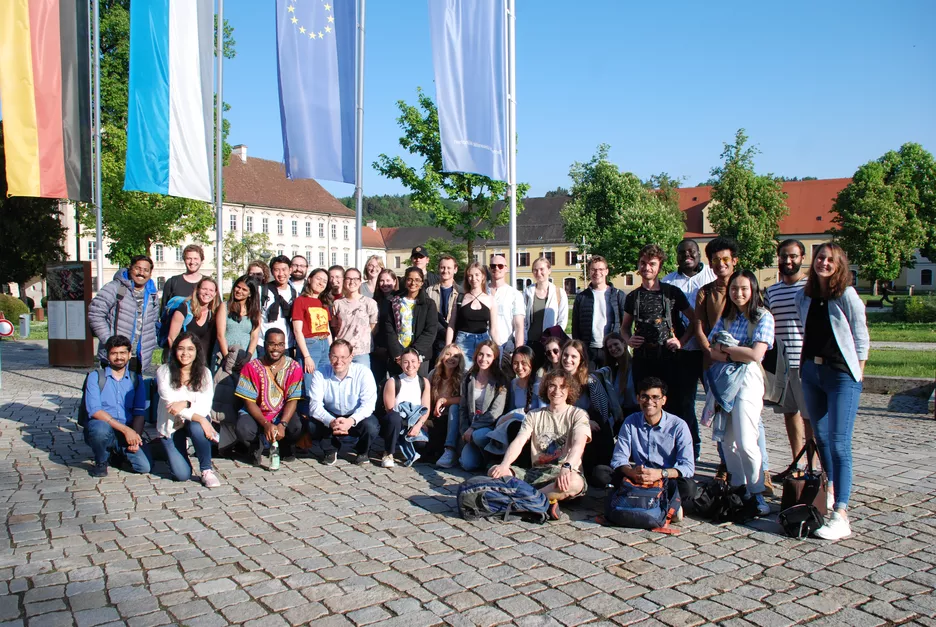
The first EuroTeQCollider 2022 was a great success.
In the summer semester of 2022, 12 highly motivated teams worked intensively with their mentors from business and research on solutions for their challenges under the motto "Leave no Waste behind". A total of 74 students from various bachelor's and master's programs took part in the project weeks.
At this point, we would also like to thank all challenge collaborators and mentors for their outstanding commitment and support. Without them, the EuroTeQ Collider would not have been possible!

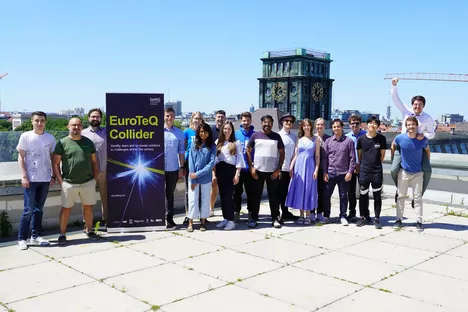
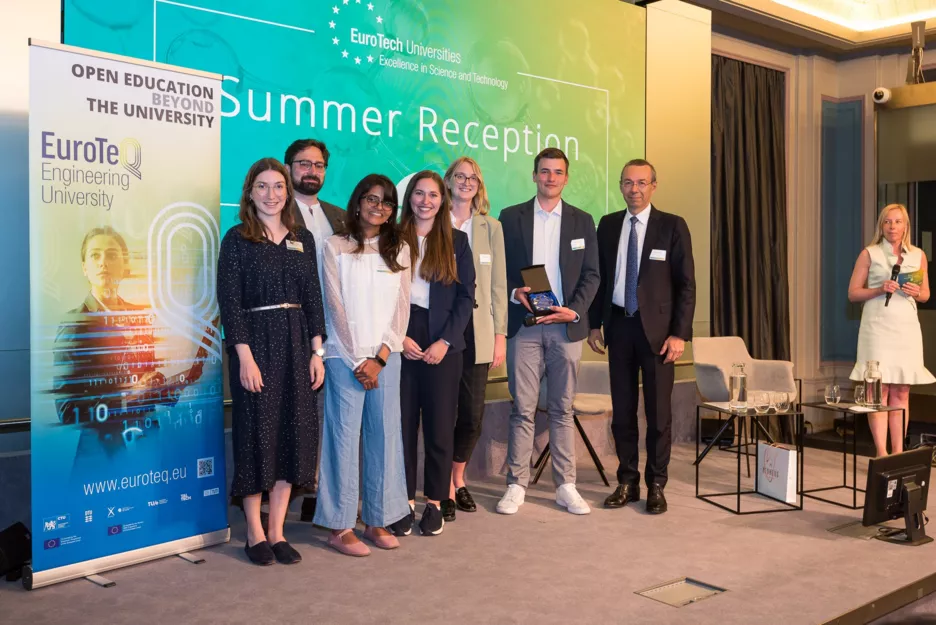
Winner teams of TUM and CTU at the EuroTeQaThon in Munich. Picture: Peter Finger/ TUM
EuroTeQaThon: June 10-12, 2022
After the local Collider project weeks at each of the six EuroTeQ universities, the best projects were presented at the EuroTeQaThon from 10 June to 12 June. The EuroTeQaThon was organized by the Junge Akademie and held in pairs:
- DTU hosted Tal Tech in Copenhagen,
- L'X met the participants at the TU/e in Eindhoven and
- CTU students from Prague came to TUM for the weekend.
The recording of all pitches during the EuroTeQaThon can be found here.
At the TUM Collider level, the following teams in the three categories "Consumption", "Energy", and "City" were selected to present their projects at the EuroTeQaThon:
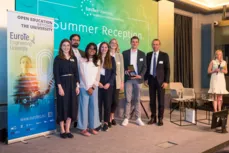
Challenge Collaborator and Mentor
Markus Forthaus, Siemens Advanta
What is the Waste Challenge?
Siemens Advanta challenged us to find a solution to prevent improper disposal of medical imaging devices, such as MRIs and X-rays, that are currently unaccounted for. Wrongfully disposed medical imaging devices pose a social, environmental, and economic threat for OEMs like Siemens Healthineers. We, Team Advan.ce, developed a sustainable and scalable solution consisting of three modules, namely a Device-as-a-Service strategy, a certified B2B-Partner network, and a Digital Platform, which alters the global linear business model of Siemens Healthineers to a circular one by closing the loops and hence prevents devices from falling out of sight.
Pitch on the EroTeQaThon and qualification round at TUM
Challenge Collaborator and Mentor
Challenge-Collaborator: Plant a Seed | Mentor: Greg Jäger, Cyber Farms
What is the Waste Challenge?
Starting as a subdivision of the student initiative Plant a Seed, we have developed an innovative vertical farm setup and devised a strategy towards a more sustainable future. Our first step will be to build our module on the TUM Garching campus, where students will learn more about urban farming and may even conduct their own research. From there, we would like to introduce our concept to larger urban communities and influence policy-making to achieve food security, while rationally utilizing the resources.

Challenge Collaborator and Mentor:
Susanne Grohs von Reichenbach, Think Digital Green
What is the waste challenge?
The challenge focused on digital waste. Frankly, most of our team members were new to this concept. What was especially curious to us, as a team of students interested in sustainable development who are fully immersed in the digital world, was our limited understanding of the impact of digital waste. This showed us that greater awareness of this topic was a worthwhile direction to pursue.
We began by understanding the carbon footprint of our daily digital lives. We sought to create a solution that would be both simple and effective in raising awareness about the issue. Additionally, we developed a mobile application to help people assess their digital footprint and provide suggestions for reducing it. We also explored other problems of the digital era, and we hope the digital waste reduction and other targets for a new digital era would inspire the creation of a new SDG 18.
Winners of the first EuroTeQ Collider 2022 at the European Level
We are delighted to announce that our TUM team, Advan.ce, was able to convince the jury members at the European Level. Their outstanding efforts and work make them the overall winners of the EuroTeQ Collider in the category Consumption.
These were the challenges of the summer semester 2022
These were the challenges and mentors the participants could choose from.
How to get rivers and their ecosystems plastic and waste free? (Cities)


Introduction
Both humans and other animals are dependent on the availability of clean water. Rivers and oceans provide an essential habitat for invertebrates, fish, birds, and mammals. Humans strongly depend on intact river systems, which provide drinking water, irrigation for agriculture, transport routes, and recreational areas.
Mismanaged Plastic waste is increasingly entering watercourses, either directly or via wind or surface transport during heavy rainfall, harming marine and riverine ecosystems. Most of the plastic is transported via riverine systems to the ocean.
During the transport process, plastic accumulates on riverbanks, in sediments, at water treatment plants, in lakes and impoundments, and remains within the riverine ecosystem for several decades. During floods, the retained plastic is remobilized and transported to the oceans.
Current cleaning technologies, such as the RiverScreener, focus on preventing plastic emissions to the oceans via rivers, but overlook the long residence time of plastic in the river and its impact on riverine ecosystems.
What is the Waste Challenge?
How can we make our rivers and their connected ecosystems plastic and waste-free?
As our rivers are polluted and plastic remains in the river stretches for several decades, it is not enough to stop plastic input/ usage and to hinder plastic emissions into the oceans. We must clean our rivers, as they are vital components of a healthy and intact environment.
- Can we efficiently clean plastic-polluted river beds and banks with technical solutions?
- Can we find management strategies for rivers and impoundments that enable an easier cleaning technology?
- Which biological factors need to be considered? Are fish or other species harmed by a developed method?
- How can riparian stakeholders participate? How can we raise social awareness about the problem?
Desired Outcome
This challenge aims to restore our rivers worldwide. A fundamental step is the removal of the plastic by technical and management means. Those means should not interfere with ecosystems and should provide a sustainable life cycle. The cleaning measure should last as long as possible, ideally for all future generations.
Desired Impact
In 2019, UNICEF awarded the Photo of the Year, which represented the social situation of children in the Tondo slum, Manila, Philippines. Former fishermen and children swim through the polluted water in the bay, fishing for plastic bottles that can be sold to recyclers. This can be highly dangerous, especially during the typhoon season. Those people in the slum suffer from food poisoning, lack of drinking water, Dengue fever, diarrhea, Leptospirosis, and skin diseases running rampant, malnutrition, and, in turn, life expectancy is low. We aim to improve the water quality and, consequently, the quality of life for humans. Simultaneously, we restore an intact riverine ecosystem providing habitats for fish, mammals, birds, and invertebrates. Fishermen should be able to fish for fish again, rather than plastics.
Relevant considerations for the challenge/theme
As the already emitted plastic will remain in the polluted river stretches for decades, the problem cannot be solved by finding strategies to prevent mismanaged plastic waste from entering the ecosystem. We also need to address the plastic waste stored in rivers and develop technical solutions in conjunction with management solutions to clean our riverine ecosystem.
We must not harm ecosystem organisms through our cleaning actions. Social participation can support the acceptance of measures by the riparian community and stakeholders. Ultimately, we should strive to improve the living conditions for future generations.
Relevant links
https://www.un.org/pga/73/plastics/
https://www.cee.ed.tum.de/en/wb/projekte/riverscreener/
https://doi.org/10.3389/frwa.2021.786936
https://doi.org/10.3389/frwa.2021.724596
https://www.muhr.com/en/home.html
https://feature.undp.org/plastic-tidal-wave/#group-the-great-garbage-patch-KX7j6ucP2U
https://www.unicef.de/informieren/aktuelles/photo-of-the-year/contest-2019
The Ice Stupa Challenge - From the Himalayas to the Bavarian Alps (Cities)
Introduction
With rising temperatures, glaciers worldwide are melting at an alarming rate. For example, since 1850, glaciers in the Alps have lost between 30% and 40% of their surface area and half of their volume, with an additional 10% to 20% of their volume having disappeared since 1980. At the current rate, glaciers in the Everest region are projected to lose approximately 40% of their ice by 2050 and around 83% by 2100.
In the context of progressive desertification and climate-related challenges, artificial glaciers have been constructed in the Himalayas for centuries to capture and store water that would otherwise flow downstream. This form of holding water enables the community to have a water reservoir for domestic use and for irrigating their crops during the springtime. In 2013, the Ice Stupa Project introduced an improved technique, featuring vertical glaciers in Ladakh, constructed with a simple wooden structure and a pipeline. How can we scale up the Ice Stupa technique to effectively combat desertification and the melting of our natural glaciers?
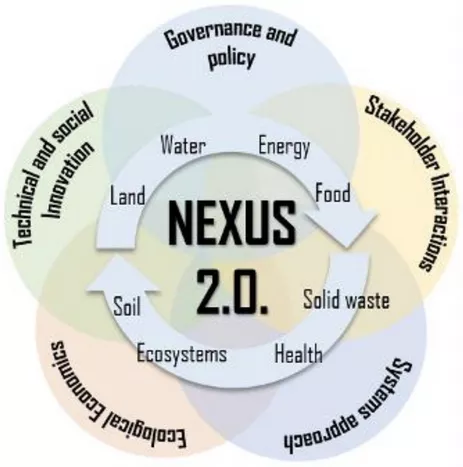
Moreover, could we build our own Ice Stupa in the Bavarian Alps to utilize it as a Sustainable Living Lab for developing WEF Nexus-related applied and transdisciplinary research to save the glaciers and address climate change?
What is the Waste Challenge?
Building an Ice Stupa is an artisanal process that could be optimized through applied multidisciplinary research linked to the Water-Energy-Food Nexus. Leaving no waste behind in the context of this project implies ensuring that the stupa water used for households and crops is clean and treated before continuing its course downstream, where other species of flora and fauna can benefit from it. However, there are many different challenges associated with it. Namely:
- The need to import and transport pipes to highly inaccessible and protected mountain areas with no infrastructure (could we recycle PET bottles to craft our own pipes? Would such material be safe for water harvesting and resistant to such temperatures? What are other feasible solutions?)
- The energy to sprinkle the glacier should be only supplied by water pressure (the height difference and contraction choke are crucial)
- The control of the water melting and irrigating the crops requires the design of outputs and a closed water cycle (also, water should be treated before going back to its natural stream or, even better, back to the glacier)
- The type of crops that can grow in such conditions is limited
- The need to conduct a feasibility study to determine the best location and needed resources to build our Ice Stupa (or a series of Ice Stupas) in the Bavarian Alps (could we bring Mr. Sonan Wangchuk – creator of the Ice Stupa Project in Ladakh – to mentor us? Could we try to contact Mr. Ovidiu Serghe, who managed to build one in Oberengadin/Graubünden in Switzerland, to share their experiences and knowledge?)
- A plan to monitor and maintain the Ice Stupa(s) as a Sustainable Living Lab for it to generate data and knowledge that could be extrapolated to other places in the world
Desired Outcome
Wouldn’t it be great to do participatory action research while preventing glacier shrinkage? Bringing the Ice Stupa technology to the Alps as a Sustainable Living Lab will enable us to develop research that mitigates the impacts of climate change on our glaciers. We first need to study the feasibility of building Ice Stupas in the Alps (and therefore anywhere), understand the conditions and implications, and optimize the building technology. Then, we will be able to verify how effective they are in protecting our glaciers and in irrigating our crops. If we manage to scale up this initiative, artificial glaciers could help us mitigate the increase in ocean levels, desertification, and the imbalance in the food chain.
Desired Impact
The link between the Ice Stupa Challenge and the WEF Nexus implies the development of low-tech, nature-inspired, and high-impact strategies towards water and food security in the region and beyond. This would also give us material to collaborate closely with the Ice Stupa Project in the Himalayas (together with their SECMOL School, a capacity building programme designed by them), and with the universities and research institutions that built an Ice Stupa in Switzerland.
Imagine all the data we could gather, all the (big and small!) strategies and systems we could test and optimize, all the changes in our glaciers we could monitor, all the water we could save, all the ecosystems we could protect by building this lab.
Relevant considerations for the challenge/theme:
As with any early-stage project, there are financial and capacity issues. This means that we would need to conduct a feasibility study to gather the information necessary for generating a proposal to seek funding. Moreover, once we have the funds, we need to consider that building and maintaining an Ice Stupa in an inaccessible mountain region is not easy: there will be harsh weather conditions, lack of infrastructure, and trial-and-error strategies, among others.
As this is a long-term challenge, the traced strategy could be divided into stages, for example: 1) Feasibility study + tracing a collaboration strategy, 2) Seek for funds, 3) Building the Ice Stupa (improving the construction technique?), 4) Monitoring and optimizing stage, 5) Building adjacent projects (e.g. raised beds and/or green houses for crops, prototypes of recycled pipelines, design of closed-cycle irrigation systems, etc.), 6) Data gathering and capacity building, 7) Upscaling the project (meaning more Ice Stupas in the Alps and beyond).
Relevant links
https://e-zeppelin.ro/en/mortalive-project-bringing-ice-stupas-from-the-himalayas-into-the-alps/
Recycling in developing countries - Mexico (Cities)

Introduction
In Mexico and many other developing countries, the waste management system is informal, and the culture and infrastructure for waste segregation and recycling are in their early stages. In the best-case scenario, waste is landfilled; however, some portions of urban waste are illegally dumped into rivers, used as fill in illegal landfills, or burned in the open. Just a small part of the people´s waste is recycled. In some cases, people can segregate their waste at home and then sell it to a collector center, which then sells it to recycling plants. The prices of various materials, such as PET, cardboard, HDPE plastics, metals, etc., are determined by the market for recycled materials. This system enables people with lower incomes to search through waste bins and landfills for those materials and sell them later to a collector center.
PIAS: Plantas de Impacto Ambiental y Social (Social and Environmental Impact Plants) is a project in Texcoco, Mexico, that aims to create a facility for the revalorization of waste. This revalorization center features a collection center for various types of waste materials and a recycling plant for multilayer packaging, utilizing solar energy to convert the packaging into cardboard and plastic pallets. PIAS aims to enable people to earn money from their waste, but more importantly, to provide them with the opportunity to invest in the recycling facility and benefit from the overall profits. In this way, the people are using waste as a way of investment.
What is the Waste Challenge?
In this challenge, we will explore the waste collection situation in smaller cities in developing countries, using Texcoco, Mexico, as an example. Our focus will be on the following questions and how the answers can inform the development of the project.
- How do collectors’ centers work?
- How do they receive the waste, and how do they prepare it for the different recycling processes?
- How are the people being rewarded?
- Which rewards work better?
- How to get more people to segregate their waste?
- How to increase the amount of materials that go to recycling?
- Are there ways to make the process more efficient without hurting the local people?
- How to involve technology /digitalization in this process?
- And how to guarantee fair access to poorer sectors of the population?
- How can communities get more environmental and social benefits out of this part of the waste and recycling system?
- How can the waste investments of the people be monitored?
- How to involve existing systems?
- Note: Please make sure that the challenge is open-ended
Desired Outcome
As a result, we aim to have clear and structured strategies that can be implemented at both small and large scales. We strive to increase community participation in waste segregation, increase the amount of materials that are recycled, and generate a positive impact on the environment and the surrounding communities near collection centers and recycling facilities.
A further goal is to create an MVP to test different ideas and alternatives that could improve the system.
Desired Impact
As a desired impact, we aim to increase the number of small community members who benefit from waste segregation. We want them to understand the financial, social, and environmental benefits that they can create by diverting every piece of trash from the landfill. This without affecting the workers in the waste sector.
Relevant considerations for the challenge/theme:
- Implementation is planned to be in Mexico
- We are focusing on the first part of the recycling process: recollection of waste, segregation of materials, and conditioning for recycling.
- We want to have a strong focus on the social component: How to communicate with the locals and how to motivate them to be part of our project?
Relevant links:
Key stake holders: Ecolanacontacto@ecolana.com.mx
Building a Smart Irrigation System (Cities)

Introduction
Smart irrigation systems employ automation to save time and utilize sensors to make more informed decisions about when crops should be watered. Existing automated irrigation systems have been shown to increase crop yield and reduce water use and labour. Industrial greenhouses have utilized such systems for a long time, but transitioning to community gardening would be the next significant step in giving local communities greater self-reliance.
What is the Waste Challenge?
The most important resource to consider with gardening is water. The primary goal should be to quantify water usage and minimize it, or even recycle it (e.g., using rainwater or grey water from household pipes). There are different types of irrigation, such as hand watering, drip irrigation, and subsurface irrigation, which can influence water use. Moreover, the structure of the gardening environment, whether it is raised beds or vertical farms, will also determine water usage.
Using electronic components to regulate water flow will determine energy needs (e.g., using a timer versus a microcontroller running a Machine-learning algorithm to decide when to water plants). The electrical energy required to power the system should be sourced from renewable sources and minimized. The lifetime of components, such as microcontrollers and sensors, should be taken into consideration.
Key challenges to focus on:
- Saving water
- Recycling water
- Minimizing electricity use
- Avoid toxic battery usage
- Avoid electronic waste
- Avoid the use of plastics, especially those that contain harmful additives
- Using renewable energy to power components (e.g., the pump, valve, microcontrollers, etc.)
- Avoid too many electrical components (keep it simple)
- Focus on small-scale urban gardening, i.e., a simplified supply chain (e.g., no packaging, fewer trips to the retailer)
Desired Outcome
An intelligent irrigation system that is easy to maintain and repair. As few electrical components as possible should be used to bring the system to life, with minimal battery usage, and certainly no chance of any toxic materials getting into the water. It should sustainably utilize water resources and be reliable enough to grow crops that would otherwise be purchased at a retailer, where transportation emissions become an issue.
Most importantly, the final system should be easy to work with and help educate others about its purpose. It should demonstrate to other community garden members the increased efficiency of automated watering.
Desired Impact
Community gardens are a vital means of bringing people together in cities and creating a greener urban landscape. Automated irrigation systems will be an essential way to reduce labour and time spent on watering. This will increase food security and develop closer ties within a community and its environment. When the system is no longer needed, it should be disposable, leaving no toxic waste behind.
Relevant considerations for the challenge/theme
Tips:
- Different plants have different water needs
- The plant uptake of water from the soil differs from crop to crop
- Considering what kind of vegetables are most attractive for community gardens
Out of Scope:
- Vegetable production supply chain
- Over-measuring things
Relevant links
https://cropwatch.unl.edu/2019/gap-growing-between-irrigated-rainfed-crop-yields
https://home.howstuffworks.com/recycle-water-for-outdoor-garden.htm
https://deepgreenpermaculture.com/2016/04/03/wicking-bed-construction-2/
https://scholarsjunction.msstate.edu/td/5207/
https://www.shawnee.k-state.edu/lawn-garden/Drip%20Irrigation%20for%20Community%20Gardens.pdf
How to utilize unused urban areas for food production? (Cities)
Introduction
Nearly 50% of the world’s population lives in urban areas. Most of our food is sourced from outside metropolitan areas, and long transport chains are needed to bring it to city centers. More than 1/3 of this food produced in traditional agriculture ends up going to waste. With current trends in population growth, soil degradation, and the effects of climate change, traditional agriculture will struggle to meet demand. In contrast, vertical farming has a 60% smaller CO2 footprint than traditional farming production, with minimal waste of goods. In addition, various forms of hydroponics have already proven to use at least 90% less water. By introducing food production into the city, transportation costs and related C02 emissions are reduced. This by no means suggests that current vertical farming methods can completely substitute traditional agriculture. For example, high energy consumption remains an obstacle, but it provides a much-needed additional source of food production.
What is the Waste Challenge?
Building on efficient hydroponic methods that can be employed in urban environments, how can we introduce an additional food production source closer to the consumer while minimizing energy consumption, CO2 footprint, and food waste?
Desired Outcome
By shortening the distance between farm and table, people will have an increased awareness of our food supply systems. Further implementation of vertical farming in our cities diversifies our food supply system. It reduces the fossil fuel usage associated with logistics and transportation, resulting in a decrease in overall food waste due to increased local availability.
Desired Impact
With the addition of productive green spaces in the city, people will be more connected to their food sources, value the crop more, and have a better understanding of its complexity.
Relevant considerations for the challenge/theme
Must include Indoor or outdoor hydroponics/vertical farming methods that can be applied to a variety of urban environments.
Relevant links
https://umwelt.asta.tum.de/rfu/language/en/projects/plant-a-seed/
https://www.cyberfarms.de/ https://www.thebalancesmb.com/what-you-should-know-about-vertical-farming-4144786
Blogs, reports, and design software for Controlled Environment Agriculture
https://www.agritecture.com/blog/2021/11/16/plant-chicago-the-circular-economy-and-supporting-the-next-generation- of-entrepreneurs
International association for vertical farming in Munich
German NGO aiding with their farm food challenge
Social Innovation towards a sustainable European food system (Consumption)
Introduction
The European standard in the food system is highly unsustainable (highly processed and animal-based), and consumers are disconnected from food, its production, and impact. The EU is promoting greater societal awareness and engagement with the food system, which aligns with its farm-to-fork strategy. A shift to low-processed plant-based diets is needed. The foodprint approach is oriented towards this strategy. It is a bottom-up social innovation designed to promote a more sustainable diet. Food waste is an inconsiderate and inefficient use of resources (e.g., diets based mainly on unsustainable foods) and careless consumption of food, without awareness of its value.
Food is not rational: Top-down, market-based approaches often perform poorly (e.g., meat tax). Most of the food information we are exposed to is advertising. People are relegated to the role of consumers and have no say in shaping the food system. Finding innovative solutions to empower people to understand, reflect on, and shape their Foodprint could be helpful.
What is the Waste-Challenge?
Develop a scalable and flexible package of initiatives, tools, and interventions to implement to foster food education and awareness among Munich university students.
Proposal: Design an “Empowering Mensa”
- QR-code installations in strategic points (e.g., waiting line)
- app linked to a calculator to track one's own Foodprint (including positive reinforcement mechanisms)
- sustainability scores for foods served and displayed along with nutritional information
Desired Outcome
Foster bottom-up social innovation towards more sustainable diets by increasing food awareness among European youth and fostering food education in new, creative, and unconventional ways.
- Students make more informed and sustainable food choices
- The concept could be extended to other EU universities and public institutions
- Increased societal engagement with the food system
- Food citizens define where they want their foodsteps to lead
Desired Impact
A world where people are connected to the food they eat, the way it is produced, and the impact it has on the environment and on others. A world where people are not mere consumers, but food citizens contributing to the shaping of a fair, democratic, and sustainable food system.
Relevant considerations for the challenge/ theme:
- Highly interdisciplinary character: from developing technical tools (e.g., Foodprint calculator) to design and societal analysis
- Highly open-ended: creativity, flexibility, open-mindedness, critical thinking, problem-solving attitude, respect, empathy
- Attitude & Communication: non-judgmental, positive, and empowering
- Focus on gain framing, avoiding the rhetoric of restriction
- Creative ways of educating and informing
- Explore synergies with stakeholders
Foodprint is not an organisation yet. But.. It could be soon! The team working on the challenge could outlive the EuroTeQ Collider. An integration within Plant a Seed is possible.
Relevant links
Student platform to reduce waste at TUM (Consumption)

Introduction
According to the United Nations Environment Programme, we generate more than 11 billion tons of waste annually. In your private student life, as well as in the university context, you contribute to this number. We want to encourage you to explore solutions for waste reduction in a specific area of the TUM campus that you have selected, focusing on waste and/or the waste generated by TUM students in general. You, as students, with approx. One hundred seventy study programs at the Technical University of Munich can help you utilize your interdisciplinary knowledge to tackle this challenge and capitalize on the opportunities provided by the internet, technology, and platforms.
What is the Waste-Challenge?
- How can a platform help to reduce waste at TUM?
- How should the platform be structured?
- What offers your platform, and what waste problem does it tackle?
- What kind of items do you want to include?
- What data do you need, and how are you going to work with it?
- How can cutting-edge technology (AI, IoT, Mixed/Virtual Reality) help to simplify the usability and impact of the platform?
- What are the limitations of the platform?
- What are good incentives for using the platform?
- How should the platform be promoted?
- How can the success of the platform be measured?
Desired Outcome
Please develop a platform by students for students. We do not expect a fully functional platform, but rather a prototype.
Desired Impact
The platform aims to raise awareness for waste prevention. Inspire students to take action against unnecessary consumption, impulsive buying, and a culture of waste. Show and communicate the clear commitment and path of TUM towards a measurable waste reduction.
Relevant considerations for the challenge/ theme:
Think about what would help you to reduce waste and about the power of data, since we can’t solve a problem that we don’t fully understand.
Contact: t-ssalfetter@microsoft.com
Relevant links
Leave no waste behind in construction industry (Consumption)

Introduction
To minimize waste and optimize reuse and recycling, data gathering, measurement, visualization, and modeling are essential for making the value chain transparent. This enables predictive and optimized waste management, sorted according to a highly automated waste management plan for each building/city.
Responsible waste management is an essential aspect of sustainable building. In this context, managing waste means eliminating it where possible, minimizing it where feasible, and efficiently reusing materials to create new, high-value products. Solid waste management practices have identified the reduction, recycling, and reuse of waste as essential for sustainable management of resources. Therefore, the Construction Waste Management Plan should increase transparency regarding the use of materials, the recycling rate of materials, and optimize methods for demolition to create highly valuable resources based on waste recycling.
What is the Waste Challenge?
Due to the increasing number of landfills, reduced access to new material resources (to make supply chains reliable), and CO2 Emission reduction, the waste from construction, refurbishment, and demolition needs to improve the sorting, recycling, and reuse processes. Therefore, processes and products need to be transparent from the beginning (design) to the end of the building's lifecycle, e.g., knowledge of materials and composites, as well as the recycling rate of the product. New waste management processes must be visualized, modeled, and simulated to enable optimized prediction and sorting of materials for recycling and reuse.
1. Which methods and processes already exist for waste management to increase recycling and reuse of materials? Challenges and pains?
2. Which parameters/functions within the whole building-life-cycle have to be measured, transparent, and predictive to install an optimized waste management process/steps? Improvements for clear recycling and efficient sorting?
3. Which processes should be modeled and simulated to optimize the recycling and reuse rate of buildings (construction, refurbishment, and demolition)
Desired Outcome
Recommendation of an improved waste management plan. Model/simulation for an optimized waste management plan with an interface to building life-cycle models.
Desired Impact
Make buildings green by focusing on energy efficiency and waste management. High rate of recycling and optimized reuse based on an improved sorted waste management, recycling certification per building, and support of resilient supply chains
Relevant considerations for the challenge/theme:
Check today’s waste management due to challenges/pains/ room for improvements. Check easy-to-use modeling and simulation tools for waste management plans
Relevant links
A day in the life of a sustainability-minded engineer (Consumption)
Introduction
In most companies that develop, produce, and sell products, business targets, portfolio strategies, processes, and organizational setups are still based on business paradigms that do not yet fully incorporate sustainability. Suppose industry takes on the challenge to avoid waste from production and later usage of sold products, uses less water and energy during production, reuses materials and products at end-of-life, or avoids using critical materials in the first place. In that case, the effects of any improvements being implemented will not reach their full potential unless companies adopt a sustainability mindset in everything they do.
However, the required large-scale transformation of companies to become truly sustainable is often unclear. What has become clear, though, is the widely accepted finding that companies determine up to 80% of products’ environmental impacts already at the product design phase (see link below). Therefore, starting the transformation towards true sustainability must also include new approaches to product design.
What is the Waste Challenge?
Improving a product’s environmental impact forces companies to redesign the product. Decisions on product architecture or the materials used determine how effectively and at what cost the product can be recycled or reused later. Hence, product design is a significant lever for avoiding or reducing waste, decreasing CO2 footprint, and water consumption during production, among other benefits.
However, reducing waste by the design of a product is a complex task. Already in the very first step of product requirements specification, sustainability requirements compete with customer requirements and those from inside the company, both technical and commercial. The interdisciplinary design teams will need to deal with this conflict of interest and find balanced compromises. At later stages, when defining the technical product specification, team members will need to understand the lifecycle effects of product design decisions on supply chains, manufacturing processes, service processes, and recycling technologies. Development engineers and production engineers will need to adopt a strong, sustainable product lifecycle orientation, and their roles and scope of work will likely become more versatile as a result.
Key questions:
- Which roles and functions along the value chain (sales/marketing, R&D, procurement, manufacturing, logistics, service) need to be involved when developing products that are sustainable-by-design?
- Which roadblocks does the current product development paradigm create for products to become more sustainable-by-design and effectively support a zero-waste target?
- Which roadblocks are of a technical nature (e.g., systems engineering methodology, product technology, IT tools, knowledge on materials, etc.) and which rather stem from people trying to preserve their current mindset, empowerment, and behavior?
- What are the consequences for the future set of skills and behavior of a Sustainability-minded development engineer?
Desired Outcome
All transformations require guidance towards an attractive future state, explaining in a comprehensible way how people will act differently in the future to achieve defined goals. For the EuroTeQ Waste Challenge, participating teams are expected to develop a blueprint/picture of the future, illustrating the approach to working in the early stages of creating sustainable products. The blueprint shall depict the differences compared to traditional working modes with a focus on engineers in product development and manufacturing engineering. The blueprint shall make the necessary changes in the skills and behavior of the engineers and the interdisciplinary team transparent and comprehensible in their daily routines.
Desired Impact
The blueprint will serve as a comprehensive and easy-to-understand description of the future state, from which companies can derive transformation targets, strategies, and implementation plans. The blueprint should be explicit enough to serve as guidance for recruiting, professional education, leadership development, human resources, operations excellence/process governance, and operations in defining effective action plans.
Relevant considerations for the challenge/theme
Although several roles and functions in a company are affected by a transformation towards sustainability, this waste challenge focuses on those roles directly involved in product design, at a minimum, the roles responsible for the technical development and specification of products.
Relevant links
Circular Economy Action Plan, European Commission, 2020
Contact Markus Forthaus:
Tracking and sustainable treatment of deactivated products (Consumption)
Introduction
Siemens sells products into global markets either directly to customers or via resellers and system integrators. In many cases, Siemens has detailed information about the installed base of products over the entire product life cycle. Often, products are remotely monitored via permanent digital connections, and, therefore, Siemens also gets the information when a product is taken out of service. In such situations, Siemens offers customers the option to return products for environmentally responsible disposal or to Siemens factories for reuse of components or refurbishment of entire products.
What is the Waste Challenge?
Unfortunately, the share of Siemens’ installed base of products with no information about location, customer, or usage status is significant. Typically, those products were sold via one or multiple resellers that, for different reasons, did not reveal the customer’s identity to Siemens. In other cases, registered products were sold by the customers to other customers, and from then on, Siemens lost sight of those products. For example, the Siemens Healthcare business estimates that approximately 30% of its sold products lack such information (e.g., Computer Tomography Scanners, Magnetic Resonance Imaging Scanners, X-Ray machines, Ultrasound devices, laboratory diagnostics systems, etc.). The share is higher in underdeveloped countries/regions, and lower in more industrialized countries/areas, with the lowest rates in Europe.
Siemens strives to reduce waste to an absolute minimum. However, for the share of products without any location/customer status information, Siemens has no control over the type of disposal once those products are taken out of service. In the worst-case scenario, customers may dispose of even complete products in landfills, rivers, and other areas.
Key questions:
- How can Siemens ensure that no products from the installed base are disposed of as waste, without Siemens knowing about it?
- For the suggested solutions, how can the effort and cost for customers and resellers be kept at a minimum to avoid competitive disadvantages for Siemens?
- What solutions could minimize cost for Siemens, considering costly and CO2-generating logistics for returning deactivated products to Germany, especially from the more distant regions of the world?
Desired Outcome
The suggested solution should enable Siemens to (again) get the current location/customer/status information of a product, at the latest, at the time of its deactivation/planned disposal. Based on this information, Siemens can then determine the optimal measures for reuse and/or recycling and update its records to monitor Siemens’ sustainability improvements.
Desired Impact
Siemens is responsible for the sustainable use and disposal of its products over the entire life cycle. The solution will significantly impact Siemens’ ability to avoid waste generation from its products due to disposal beyond its control in landfills.
Relevant considerations for the challenge/theme:
Considered scope of products: Medical Imaging, Laboratory Diagnostics, Point-of-care Diagnostics
Relevant links
https://www.siemens-healthineers.com/de
Contact: Markus Forthaus
Internet: www.siemens-advanta.com/consulting
LinkedIn: https://www.linkedin.com/company/siemens-advanta-consulting
A pathway to e-waste management (Energy)
Introduction
Semiconductors have been a vital component of the information revolution, which has profoundly reshaped our society. Modern society would not exist without this essential resource. Moreover, semiconductors are fundamental to many sustainability solutions, including automation, innovative infrastructure, electrification, and virtualization. One of the consequences of this tremendous growth is the constant generation of e-waste (electronic waste). E-waste is various forms of electric and electronic equipment that have ceased to be of value to their users or no longer serve their original purpose. E-waste products have exhausted their utility value through redundancy, replacement, or breakage and include both “white goods,” such as refrigerators, washing machines, and microwaves, and “brown goods,” such as televisions, radios, computers, and cell phones. Given that the information and technology revolution has exponentially increased the use of new electronic equipment, it has also produced growing volumes of obsolete products; e-waste is one of the fastest-growing waste streams. Although e-waste contains complex combinations of highly toxic substances that pose a danger to health and the environment, many of the products also contain recoverable precious materials, making it a distinct type of waste compared to traditional municipal waste.
What is the Waste Challenge?
Currently, the world produces up to 50 million tons of e-waste annually, and, according to a report from the Platform for Accelerating the Circular Economy (PACE) and the UN E-Waste Coalition, this number is expected to reach 120 million tons per year by 2050 if current trends continue. In 2017, more than 44 million tons of electronic and electrical waste were produced—that’s more than thirteen pounds for every person living on our planet. The annual value of global e-waste is estimated to be over $62.5 billion, surpassing the GDP of more than 123 countries. With e-waste being the fastest-growing waste stream in the world, the UN has described this issue as a “tsunami of e-waste.”
Key questions
- How are e-wastes managed at the moment? (e.g. current status + market research)
- How can the e-wastes be reused or recycled efficiently with technologies using semiconductors? (e.g., AI, IoT, Deep Learning, Quantum computing, Big data, Pressure sensor, CO2 sensor)
- What are the strengths, weaknesses, opportunities, and threats of the e-waste management system you suggested, and how can the risks be managed?
- What are the environmental, social (e.g., health, quality of life, food chain), and governmental implications of your e-waste management?
Desired Outcome
An e-waste management system is developed with a thorough understanding of the current market status, technologies, and potential risks. It would make devices containing semiconductors more sustainable by recycling and reclaiming materials.
Desired Impact
The impact of the desired outcome could be explained in correlation to the UN Sustainable Development Goals (SDGs). Solving the e-waste challenge could bring our society one step closer to achieving its goals.
- GOAL 3: GOOD HEALTH AND WELL-BEING
Ensuring healthy lives and promoting the well-being of all at all ages is essential to sustainable development. - GOAL 6: CLEAN WATER AND SANITATION
Clean, accessible water for all is an essential part of the world we want to live in. - GOAL 8: DECENT WORK AND ECONOMIC GROWTH
Sustainable economic growth will require societies to create the conditions that allow people to have quality jobs. - GOAL 9: INDUSTRY, INNOVATION, AND INFRASTRUCTURE
Investments in infrastructure are crucial to achieving sustainable development. - GOAL 11: SUSTAINABLE CITIES AND COMMUNITIES
There needs to be a future in which cities provide opportunities for all, with access to basic services, energy, housing, transportation, and other essential resources. - GOAL 12: RESPONSIBLE CONSUMPTION AND PRODUCTION Responsible Production and Consumption
- GOAL 14: LIFE BELOW WATER
Careful management of this essential global resource is a key feature of a sustainable future.
Relevant Considerations for the Challenge/ the Theme
In this challenge, technologies primarily refer to semiconductor-embedded electronics, including AI, IoT, deep learning, quantum computing, big data, pressure sensors, and CO2 sensors. For instance, inspiration can be found in the research of Piotr Nowakowski.
- An evolutionary approach to the vehicle route planning in e-waste mobile collection on demand (2021)
- Combining an artificial intelligence algorithm and a novel vehicle for sustainable e-waste collection (2020)
- Application of deep learning object classifier to improve e-waste collection planning (2020)
- Reconfigurable Recycling Systems of E-waste (2020)
- A novel, cost-efficient identification method for the disassembly planning of waste electrical and electronic equipment
- equipment (2018)
- A proposal to improve e-waste collection efficiency in urban mining: Container loading and vehicle routing
- problems–A case study of Poland (2017)
Relevant links
Stop unnecessary carbon emissions! (Energy)

Agenda 2030: Why do we need a new Sustainable Development Goal 18 that covers the ecological impact of avoiding digital waste when generating and consuming data?
Introduction
Digital services and devices are ubiquitous in both professional and personal settings. Did you know that every citizen in Germany emits approximately. 1 t of greenhouse gas emissions/year for digital applications? Most of us do not feel well-informed about this part of our entire carbon footprint (approximately 12 t per year). Estimates reveal that a high percentage of the footprint is due to unwillingly and unconsciously transmitted data.
Why is this? The digital lifestyle is linked to both the physical side of data (e.g., servers, networks) and to devices (resources, production, and transport of digital devices, see SDG 12).
Focusing on digital waste is becoming increasingly important as the total amount of data is expected to continue growing rapidly in the next few years. Experts discuss how to consider the environmental impact of data, including energy consumption, and strategies for addressing it. Estimates reveal that a high percentage of the footprint is due to unwillingly and unconsciously transmitted data. Note this quote: “…dark data causes the same amount of carbon dioxide emissions annually as 80 countries combined, explains Eric Waltert, Regional Vice President DACH at Veritas Technologies.” https://www.cloudcomputing-insider.de/ueberfluessiger-datenmuell-vergroessert-den-co2-fussabdruck-a-926234/
What is the Waste-Challenge?
Driving digital lifestyle and transformation, respecting the sufficiency of data means avoiding digital waste and unnecessary energy expenditure. This would contribute to achieving the goal of carbon-free organizations, communities, and even countries more quickly, without any disadvantage or economic setback. The effect of reducing digital carbon footprints this way is probably underestimated.
Key questions
- The amount of data consumption rises every year. What steps can be taken to understand, reduce, avoid, or even recycle data in daily professional and private life? Consider, for example, digital decluttering, digital clean-ups, and using digital services with the mindset of minimizing data transfer.
- Try to design a masterplan: Who must take action for SDG 18 and how? (e.g., civic community, CIOs, sustainability officers, employees in total, digital agenda of ministries, sustainability consultants/agencies, influencers… )
Desired Outcome
Draft of a practical framework to give support to all individuals and organizations that handle data. Draft of a communication toolbox that comes along with inspiring people to quit wasting data and causing useless carbon emissions.
Desired Impact
Every person who has been in touch with the framework and its easy and inviting practical tips will “grow” for a new digital mindset: the sustainable way of enjoying digital life that strives for mindful handling of data without missing anything.
Relevant considerations for the challenge/ theme
- Analyze the approach “SDG 18” by Amy Luers in its full range. Then highlight references to digital waste.
- Data management: collection of relevant digital actions in daily private and business life (a daily schedule from waking up until going to bed at night could help to visualize individual digital activities)
- Estimation of the carbon footprint of data transfer and on the total footprint of citizens can serve as a motivating kick-off (data = energy = CO2)
- If the journey that data takes is more visible, one could find approaches to avoid data, “cut” them off, or identify data as waste and therefore negligible. Consider, for example, folders on your Email Provider, video conferences, and document storage. Mp4, ppt, etc.
- After depicting the big picture: Which guiding ideas could be helpful to avoid digital waste? For individuals and for an organization?
- If you were to explain to your friend what you have elaborated on in this challenge, how would you do this? Work out a 3-minute oral speech that will make him start fighting against digital waste
- (optional: Write an open letter to EU Commissioner Mariya Gabriel, suggesting that SDG 18 must ensure that the digital age respects digital carbon footprint at all levels)
- As a practical outcome of your study: a) Take part in a survey of futureearth.org and present your insights in plenary.“Tell us your thoughts: What should an SDG on the digital age include?”
- https://futureearth.org/2020/07/02/the-missing-sdg-ensuring-the-digital-age-supports-people-and-planet/#survey b) check the sustainablewebmanifesto.com and its keys for a sustainable future and sign if you agree https://www.sustainablewebmanifesto.com/
Relevant links
zip. Digital made it to the next round!
The Missing SDG: Ensure the Digital Age Supports People, Planet, Prosperity & Peace Amy Luers
Rechenzentren von Dark Data befreien Überflüssiger Datenmüll vergrößert den CO2-Fußabdruck (2020)
Digital Cleanup Day 2022/19/3 “What is digital trash?” and further information/challenges
TUMA No-Waste Agribusiness in Zimbabwe (Energy)
Introduction
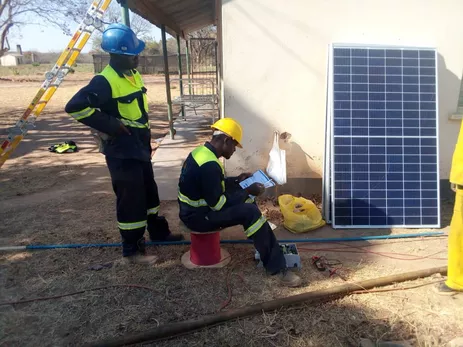
In 2018, TU eMpower Africa (TUMA) launched its first Energy-Water-Food System in St. Rupert Mayer, a rural community 160 km away from Harare, Zimbabwe. The project aims to provide people with reliable access to energy, safe drinking water, and food security. As subsistence farming is the primary food source in most rural areas in Africa, one of the objectives of the TUMA team is to make the system scalable, so it can be applied in other parts of Africa while keeping sustainability at the heart of their work.
In 2018, the first biogas plant was installed, producing up to 6 m³ of biogas per day, which is used by the hospital's kitchen, thereby reducing the need for firewood. The hospital recently got completely solarized. Therefore, the resources of the biogas plant can be used for other purposes, such as the systems arising from this challenge.
TUMA also installed 18 solar panels to power a water pump, which was later relocated to another existing borehole. A draft agribusiness program has been developed to further install drip irrigation systems. The efficient use of available water for irrigation can ensure a food supply for the community and create employment opportunities for local people.
The system has been successful, leading to overproduction of certain crops (e.g., Tomatoes) in certain seasons. So far, part of the harvest has been brought to the city markets closest to the farm for sale. However, due to the absence of a suitable business solution for utilizing overproduction, part of the crop is currently being wasted.
In a context where access to food is challenging, how could we integrate this surplus of produce into the agribusiness program? The strategy should utilize the already installed renewable energy systems.
What is the Waste Challenge?
Energy-Water-Food systems are excellent approaches to addressing food security challenges, especially in regions where access to water is limited, energy supplies are unreliable, and infrastructure is poor.
Do you think this approach can make this project fully sustainable? Can we secure access to nutritious food for the community, provide a few steady jobs, and avoid the waste of natural resources?
The strategy is to build on existing renewable energy systems using an EWF Nexus approach. Some challenges that could be turned into a strategy are, for example:
- Making use of the solar-powered kitchen.
- Use the water supply to dry the food, get it canned, fermented/pickled, preserved in salt and sugar, cooked, etc.
- The design of a distribution system that does not rely on fossil fuels for transportation and/or focuses on the local markets.
- Development of products from seasonal crops to create stable incomes for people in the community.
- Utilize organic waste generated all along the supply chain for renewable energy production in Biodigesters.
- Creation of a Circular economy by the utilization of organic fertilizers generated from the agro-business.
- Control and monitor the surplus to avoid wasting resources?
- As one of the objectives of the TUMA team is to make the system scalable, what if more local farmers could join the project?
Desired Outcome
A climate-smart agribusiness plan that could help the community in St. Rupert Mayer overcome the challenges of food insecurity, food waste, and unemployment with climate-resilient practices.
Desired Impact
The link between the climate-smart agribusiness plan and the WEF Nexus involves using technologies that do not harm the environment. Furthermore, it will raise awareness among the community and local farmers about various methods of food production and processing. It could create a domino effect, leading to capacity development and scaling the system among local farmers.
Relevant considerations for the challenge/ theme
Establishing an agribusiness plan requires time, effort, and resources. It also requires traveling to Zimbabwe and reaching St. Rupert Mayer after a long journey that feels like an odyssey due to poor infrastructure and weak public transportation connections.
Working directly with the community to identify their strengths and build on them. It involves the need to have/develop specific soft skills (such as good communication, empathy, and sensitivity), knowing that they have much of the knowledge, and bringing the technology to fit their reality. Taking into account what the community is all about should never be underestimated, especially when taking a participatory approach.
Relevant links
Creating the universities of tomorrow by optimizing lectures with regards to their energy efficiency (Energy)

Introduction
The past two years have shaken universities worldwide, with in-person lectures no longer possible and online lectures becoming a daily routine. While many students are longing for a return to in-person education, the experience and know-how gathered over the past semesters about online teaching cannot be ignored. The most significant difference between a live lecture and an online lecture is the impact of transportation on lecture energy consumption. By optimizing lecture schedules and combining online and on-site lectures, universities could reduce their energy footprint. We have already developed a simple calculator tool, our elecCalc, which allows lecturers and students to calculate the energy consumption of individual lectures. Using this toolkit as a base, we aim to expand on this idea and create a tool that is both easy and convenient to use, yet sophisticated in its underlying design. Eventually, this calculator could then be routinely integrated into the planning and scheduling of lectures.
What is the Waste Challenge?
By challenging participants to expand their elecCalc and create a tool to plan energy-efficient schedules, we are encouraging them to understand and help others understand the impact of daily activities on energy consumption. Through our challenge, all stakeholders can understand the impact of transportation on lecture energy consumption and acknowledge the opportunities presented by digitalization. Having built this understanding and acknowledgment, both the challenge participants and future users of the expanded elecCalc can efficiently shape their daily lives to avoid wasting energy, for instance, by reducing unnecessary commuting.
Key questions:
- How can the students' schedules be optimized with the help of the known energy consumption of individual lectures?
- Can the energy consumption of lectures be minimized by creating hybrid lectures where the splitting is based on travel distance?
- What are the key infrastructure components through which the universities themselves can significantly save energy?
- What is the minimum amount of information such a calculator needs to produce sensible results?
- How can you create a tool that is suitable for different universities?
Desired Outcome
The desired outcome of this challenge is an improved (re-)implementation of our elecCalc toolkit, making it a more feature-rich and user-friendly experience. It should provide a toolkit for both students and lecturers to analyze the energy consumption of lectures, allowing them to optimize individual lectures and weekly schedules from an energy-efficiency perspective.
Desired Impact
Both lecturers and students have consistently expressed interest in the energy consumption of lectures, yet no tool currently provides easy access to this information. With our elecCalc, we intend to change this. While actively changing people’s behavior to conserve energy might be a rather ambitious goal, raising awareness of the issues is an essential first step in this endeavor. By offering an easy-to-use yet powerful toolkit, we aim to take this initial step toward transforming the way university lectures are planned and delivered toward a more energy-efficient approach.
Relevant considerations for the challenge/theme
- The energy consumption of a lecture is very complex and influenced by several aspects. It is essential to find a middle ground between a model that is simple enough to easily gather relevant data and one that is complex enough not to miss important details. You will need to make assumptions, but be careful not to oversimplify the model.
- Developing a calculator toolkit requires work on many fronts: The core calculator needs to be programmed with the appropriate model, taking care of as many edge cases as possible. A pleasant, comfortable interface must be created to make the calculator's use intuitive. Documentation has to be written. The list goes on. As a consequence, resources must be allocated accordingly, and you will need to make compromises to cover all tasks. What works for one university may not work for another. Ensure that the calculator is not designed to work exclusively with one specific university in mind.
- The current elecCalc is published under a GPLv2 license, meaning that anyone can contribute to it. But this also means that, if you want to use it as a base, it must not result in a proprietary calculator tool. Additionally, consider modularity and expandability to facilitate the easy addition of future functionality.
- The participants must agree to having the outcome of the challenge further expanded, for instance, through other hackathons. Furthermore, the participants must agree to make the outcome accessible to other TUM organizations, so that, in the best-case scenario, the final product can be adopted by a TUM organization and continuously used to benefit the entire TUM community and other universities.
Relevant links
Current publicly available version of the elecCalc toolkit
Scientific & technical implementation: Alexander Holas (alexander.holas@tum.de)
Data collection & communication: Catherine Yngaunis Koch (catherine.koch@tum.de)
Transforming ReUsed IT products to a status symbol (Consumption)

Introduction
E-waste is the fastest-growing waste stream globally. To slow the growth of the waste stream and enable its use in the circular economy, we can create a positive impact through our consumption. This is possible by extending the lifespan of IT products. So why not make the use of refurbished products a status symbol?
According to the Circularity Gap Report 2021, 70 percent of global greenhouse gas emissions are directly linked to the extraction, transportation, processing, and use of materials.
What is the Waste-Challenge?
How can Reused IT products like Smartphones, Tablets, or Laptops become visible as a state symbol/status product?
- How can ReUsed IT become a status symbol?
- Are there already trends that can be used to transform mindsets?
- Could labels or seals be supporting the change?
Desired Outcome
Until now, the prevailing opinion has been that the newest and most current always emphasizes status. What levers can be set to achieve a change in our society in a different direction regarding the consumption of IT products?
Desired Impact
Minimizing the fastest-growing waste stream offers a powerful opportunity to conserve resources and protect the climate. We all have it literally "in our hands every day" to make this change. As soon as it becomes clear that you have consciously chosen a resource-saving alternative and visibly display this to the outside world, you make a public statement for climate protection.
Relevant considerations for the challenge/ theme:
Today, several examples already demonstrate how trends can positively influence consumer behavior. A new trend does not always have to be established. Things can be adapted or combined.
Relevant Links
https://theclimatechoice.com/de/kreislaufwirtschaft-best-practice-it-remarketing/
Digital Business Card
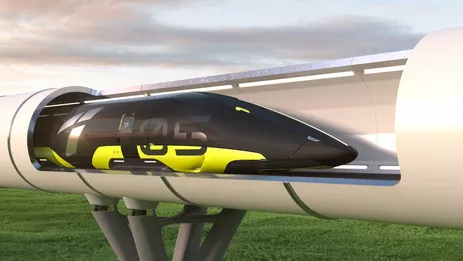
How can the macroeconomic impact of a Hyperloop route be quantified and predicted for the connected regions? (Cities)
Introduction
In 2020, TUM Hyperloop initiated a research program at TUM to construct a 24-meter test track and a full-scale prototype, marking the team's first step toward realizing Hyperloop on a large scale. As Hyperloop moves toward realization, the project's success depends not only on technological implementation but also on stakeholders recognizing the value and positive impact of the transportation mode on social, regional, and economic development.
What is the Waste Challenge?
The ever-increasing demand for mobility requires governments across Europe to continuously invest in infrastructure, connecting regions, and improving access to transportation. The Hyperloop, which enables extremely high speeds on the ground (approximately 850 km/h), allows long distances to be covered in minutes instead of hours, revolutionizing overall travel times (e.g., Munich to Frankfurt in 30 minutes instead of 3 hours). To convince governments, investors, and the public of the system's benefits, TUM Hyperloop is seeking a scalable approach and initial results that convey and quantify the economic and social benefits of implementing Hyperloop routes. Some key questions the team is trying to answer:
- Which macroeconomic dimensions would have to be analyzed based on a chosen route (e.g., MUC - FRA, MUC - BER)?
- How can the social, regional, and economic impacts be quantified, and which are the most important ones?
- What trends might result from this radical reduction in travel time, e.g., modal shift in passenger/freight traffic, reduction in pollution, etc.?
- How can these results be successfully communicated to stakeholders?
Desired Outcome
By developing a tool to predict economic and social impacts in regions connected by a Hyperloop, decisions to invest and deploy a Hyperloop on a given route can be informed by where the most significant benefits would accrue for all stakeholders.
Desired Impact
Governments and investors can deliver new transportation infrastructure in ways that go beyond simply moving people between places. It creates economic and social impacts that can be measured. When these benefits can be demonstrated, communication with decision-makers and the public is results-oriented, increasing the chances of a successful Hyperloop implementation.
Relevant Considerations for the challenge/theme
Considering the complexity of the task, reasonable simplification assumptions should be made
Relevant links
Electrification of Aircraft (Energy)

Introduction
Energy used for transport is a significant percentage of each person’s energy utilization. For example, in the UK, it is estimated that on average, 32% of a person’s energy consumption is used for transport. Sustainable Energy – without the hot air - Current consumption.
The electrification of automotive vehicles is well underway, but there is still much to be done to electrify aviation. The required energy density for aircraft often comes from combustion sources, which are not sustainable or environmentally friendly. The electrification of aircraft offers an opportunity for propulsion energy to be derived from clean and renewable green energy sources. To succeed, you must give clear, quantitative, data-driven conclusions that are inspired by the use of rigorous mathematical models and time-domain simulations.
What is the Waste Challenge?
You will use an existing MATLAB®, Simulink®, and Simscape™ representation of an all-electric aircraft as the basis for this project. You will extend this by building models of various aircraft, including those with electrical energy storage and equipment, which enable a thorough evaluation of energy consumption. Use the models to provide informed, data-driven comparisons and recommendations as to the most promising electrical configurations and technologies.
Suggested steps:
- Become familiar with existing electric aircraft models (links below) and use these as the basis for your project.
- Project variations: Choose one of the following project ideas:
- Build or integrate a model of an energy storage system. Consider the weight, size, and efficiency of one of:
- Hydrogen
- Fuel Cell
- Battery
- Other novel sources?
- Use the model to compare the advantages of different distribution systems:
- AC
- DC
- Mixed AC/DC
- Build or integrate a more detailed and representative model of one of these loads:
- Propulsion
- Sensors and electrical actuators
- HVAC
- Galley/Hotel
- Infotainment
- Other areas?
- Build or integrate a model of an energy storage system. Consider the weight, size, and efficiency of one of:
- Calculate expected efficiency and power requirements for a variety of typical flights
- Write up data-driven recommendations to influence each of:
- Individuals – Should the technologies you investigated influence flight purchasing decisions by passengers?
- Industry – Should the technology you investigated be further developed, and why?
- Government – shape government policy to direct investment and multiply the benefits
Advanced project work:
- Pick additional item/items from the project variations above.
- Parameterize the aircraft for multiple configurations: a variety of passenger capacities and numerous geographic locations.
- For comparative purposes, build one model of conventional
- Propulsion, or
- Actuation
Desired Outcome
Show the feasibility of an aircraft energy system leading to lower emission rates, e.g., by optimized energy provision, energy distribution, or energy conversion. This demo will be openly available on GitHub for the community to further evaluate and enhance knowledge.
Desired Impact
Contribute to the global transition to zero-emission energy sources by electrification of flight.
Background: In 2018, aviation was estimated to be responsible for 2.5% of anthropogenic CO2 emissions, with projections predicting values of up to 5% in 2050. Other aviation emissions (e.g., water vapor, nitrogen oxide emissions, etc.) contribute to climate change, attributing an even higher impact on climate change to aviation emissions (from the 2020 white paper ZERO EMISSION AVIATION, p. 11).
Relevant considerations for the challenge/theme:
This project is to be developed using MathWorks’ tools and made openly available for the community. This will be in the form of demos, simulations, and models.
Relevant links
The challenge can be found on GitHub (Electrification of Aircraft) as Part of MathWorks’ Excellence in Innovation Program.
Background Material: