
Resume
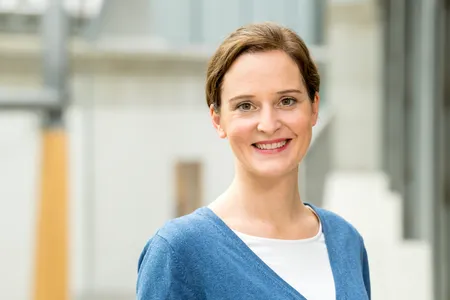
Dr. Florence Dafe is a political economist at the Chair of European and Global Governance of the Munich School of Politics and Public Policy at the Technical University of Munich (TUM). Her research and teaching cover a number of themes related to international political economy and comparative political economy, with a particular focus on global financial governance. Florence’s research interests revolve around finance and development, especially the domestic and external political constraints that governments in developing countries face in governing their financial sectors. The question which drives her research is how much policy space governments in developing countries have in governing their financial sectors in a context of globalisation and financialisation. Florence has written on the factors which shape the structural power of finance in developing countries, the strategies developing countries pursue in navigating global banking standards, the spread of financial inclusion policies, the political economy of central banking in developing countries, and the development of local currency bond markets in Africa. Prior to joining the Chair of European and Global Governance, Florence was a Fellow in International Political Economy at the Department of International Relations at the London School of Economics and Political Science (LSE) and lecturer in International Political Economy at City, University of London. She is also an associate researcher at the German Development Institute. Florence holds a Masters degree in Development Studies from the LSE and a PhD in Development Studies from the Institute of Development Studies (IDS) at the University of Sussex. Since 1 July 2021 she is also a Honarary Research Fellow at the Centre for Globalisation and Regionalisation at the University of Warwick.
Publications (selection)
- 2024: Varieties of Capitalism and Patient Capital in Developing and Emerging Economies: Evidence from Kenya, Socio-Economic Review, mwae074, https://doi.org/10.1093/ser/mwae074 (with Upadhyaya, R.)
- 2023: Local Currency Bond Markets in Africa: Resilience and Subordination, Dev Change, (with Kaltenbrunner, A., Kvangraven, I.H. and Weigandi, I.) https://doi.org/10.1111/dech.12797.
- 2021: Tussle for space: The politics of mock-compliance with global financial standards in developing countries, Regulation & Governance, (with Engebretsen, R.E.H.) https://doi.org/10.1111/rego.12427.
- 2020: Banking on courts: financialization and the rise of third-party funding in investment arbitration, Review of International Political Economy, DOI: 10.1080/09692290.2020.1764378.
- 2019: Ambiguity in International Finance and the Spread of Financial Norms: The Localization of Financial Inclusion in Kenya and Nigeria. Review of International Political Economy, 27(3): 500-524.
- 2018: Fuelled Power: Oil, Financiers and Central Bank Policy in Nigeria. New Political Economy. DOI: 10.1080/13563467.2018.1501353.
- 2018: Localising Sovereign Debt: The Rise of Local Currency Bond Markets in Sub-Saharan Africa. The World Economy (with D. Essers and U. Volz). DOI: 10.1111/twec.12624
- 2018: Balancing Multiple Central Bank Objectives: Lessons from Kenya, Nigeria and Uganda on Walking a Tightrope. In M. Ndulo and S. Kayizzi (eds.), Financing Innovation and Sustainable Development in Africa, 150-181. Newcastle upon Tyne: Cambridge Scholars Publishing.
- 2018: Demystifying Green Bonds. In S. Boubaker, D. Cumming and D. K. Nguyen (eds.), Research Handbook of Investing in the Triple Bottom Line. Chapter 15. Cheltenham: Edward Elgar Publishing (with K. Berensmann and N. Lindenberg).
- 2017: The Politics of Finance: How Capital Sways African Central Banks. Journal of Development Studies, p.1-17. DOI: 10.1080/00220388.2017.1380793.
- 2016: A financial sector to support development in low-income countries. In: S. Griffith-Jones and R. Gottschalk (eds.), Achieving Financial Stability and Growth in Africa, 1-21. Oxon: Routledge (with S. Griffith-Jones and E. Karwowski).
- 2015: Developing local currency bond markets for long-term development financing in Sub-Saharan Africa. Oxford Review of Economic Policy, 31 (3-4), p.350-378 (with K. Berensmann and U. Volz). DOI: 10.1093/oxrep/grv032.
Homepage
Resume
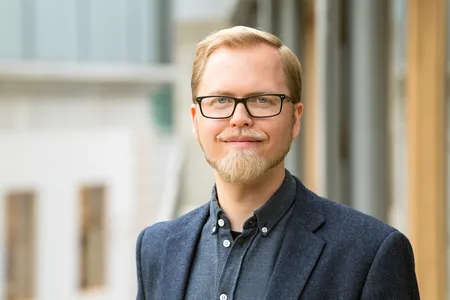
Dr. Burak Giray is a post-doctoral researcher and lecturer at the Chair of European and Global Governance at the Munich School of Politics and Public Policy. His research and teaching interests include international responses to civil conflicts, with a particular focus on UN interventions and peacekeeping operations. His current research examines how public services provided by UN peacekeepers affect the conflict dynamics. For that, he collects an original dataset on the peacekeeping activities conducted in conflict countries, mining and analyzing the official Twitter accounts of UN Peacekeeping Operations. Before joining HfP, he taught at the Hertie School in Berlin and served as a visiting researcher at Uppsala University. His year-long research stay in Sweden was funded by the DAAD PRIME Fellowship. Dr. Giray earned his Ph.D. in political science from the University of Houston, USA, in 2022.
Publications (Selection)
- Giray, Burak and J. Tyson Chatagnier. (2024). Election Accomplished: Democracies and the Timing of Peacekeeper Drawdowns. Political Research Quarterly, 77(1), 3-16. DOI: 10.1177/10659129231190614.
- Giray, Burak. (2024). Do UN Missions Have an Expiration Date? Ideational Commitment to UN Peacekeeping and the Length of Missions. International Peacekeeping, 31(1), 1-28. DOI: 10.1080/13533312.2023. 2246362.
- Giray, Burak. (2023). Ideational Commitment to UN Peacekeeping and Effectiveness. International Interactions, 49(3), 372-400. DOI: 10.1080/03050629.2023.2184813.
- Giray, Burak. (2022). Public Support for UN Missions and Attacks on Peacekeepers: Evidence From the Democratic Republic of the Congo. Peace Economics, Peace Science and Public Policy, 28(4), 305-332. DOI: 10.1515/peps-2022-0028.
Homepage

Resume
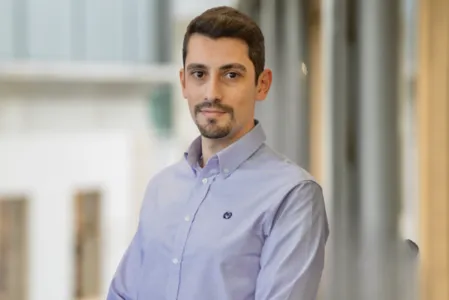
Andreas Johannes Ullmann is a post-doctoral researcher and lecturer at the Chair of European and Global Governance at the Munich School of Politics and Public Policy. He teaches and conducts research at the intersection of international relations and international law. His work focuses primarily on empirical investigation of issues in human rights, international organizations, the environment, and development. His work has been published in journals such asReview of International Organizations, Journal of Conflict Resolution, andEuropean Journal of International Law. In his doctoral project, he examined state compliance with the individual complaint procedures of the UN human rights treaty bodies. Before joining the HfP, Andreas Ullmann was a research assistant at the University of Hamburg and the University of Potsdam, as well as a member of the Berlin-Potsdam research group The International Rule of Law – Rise or Decline?. Between 2022 and 2024, he also served as editor-in-chief of theZeitschrift für Internationale Beziehungen.
Publications (selection)
- 2025: "Reconsidering the Costs of Commitment: Learning and State Acceptance of the UN Human Rights Treaties’ Individual Complaint Procedures", The Review of International Organizations 20:4: 967-998. https://doi.org/10.1007/s11558-024-09565-0
- 2024: "A Room Full of ‘Views’: Introducing a New Dataset to Explore Compliance with the Decisions of the UN Human Rights Treaty Bodies’ Individual Complaints Procedures”, Journal of Conflict Resolution 68:2-3: 534-561. (with Andreas v. Staden) https://doi.org/10.1177/00220027231160460
- 2023 “Compliance with UN treaty Body Decisions: A Glass One-Third Full or Two-Thirds Empty?”, Open Global Rights blog entry, https://www.openglobalrights.org/compliance-UN-treaty-body-decisions/
- 2022: “Seeking Overlap and Redundancy in Human Rights Protection: Reputation, Consistency and the Acceptance of the UN Human Rights Treaties’ Individual Communications Procedures”, The International Journal of Human Rights 26:8 (2022):1476-1502 (with Andreas v. Staden)https://doi.org/10.1080/13642987.2022.2036134
- 2020: “Challenges and Pitfalls in Research on Compliance with the ‘Views’ of UN Human Rights Treaty Bodies: A Comment on Vera Shikhelman, ‘Implementing Decisions of International Human Rights Institutions’”,European Journal of International Law 31:2: 693-708. (with Andreas v. Staden) https://doi.org/10.1093/ejil/chaa041
Resume
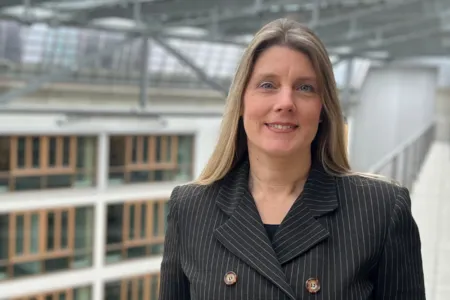
Dr. Melis Baydag is a lecturer and postdoctoral researcher at the Chair of European and Global Governance at the Munich School of Politics and Public Policy at the Technical University of Munich (TUM). Her research focuses on International Relations and International Political Economy, with particular emphasis on the domestic political foundations of foreign economic policy across emerging and advanced economies, as well as global economic governance, international cooperation, politics of aid, populism, and middle powers. Her ongoing efforts are directed at developing an integrative research agenda that seeks to bridge International Political Economy and Foreign Policy Analysis, building on a forum contribution she co-edited on this topic. She teaches and supervises student research on International Relations theory, international political economy, global governance, emerging powers, international organizations, and regional and European integration. Dr. Baydag is affiliated with the German Institute of Development and Sustainability (IDOS) as an associate researcher. Before her current roles, she held lectureships at the Chair of International Relations at the University of Freiburg and the Chair of International Politics at Ruhr University Bochum, and was a visiting lecturer at the Institute of International Studies at the University of Wrocław. Dr. Baydag received her PhD in Social Sciences (magna cum laude) from Ruhr University Bochum. She holds a Bachelor of Science and a Master of Science in International Relations from the Middle East Technical University.
Publications (Selection)
- 2026: Dialogue instead of mutual neglect? International political economy meets foreign policy analysis. Cooperation and Conflict (first view), 1-30. (with S. Fouquet, K. Brummer, S. A. Schirm, S. Oktay, F. N. Moro, M. Moschella, C. G. Thies, and L. E. Wehner). DOI: 10.1177/00108367261424470
- 2026: Rechtspopulistische Parteien in Europa und die Entwicklungspolitik: direkte und indirekte Einflussmechanismen. Zeitschrift für Politik 73(1), 45-61. (with C. Hackenesch, N. Keijzer, and J. Bergmann). DOI: 10.5771/0044-3360-2026-1-45
- 2025: Domestic ideas and interests in development cooperation of emerging donors: The case of Mexican development policy. Contemporary Politics 31(5), 684-706. DOI: 10.1080/13569775.2024.2428529
- 2025: Populist narratives and personalized national role conception in middle powers: The cases of Mexico and Turkey during the COVID-19 Pandemic. Politics & Policy 53, 1-14. (with R. Villanueva Ulfgard). DOI: 10.1111/polp.12645
- 2025: The political economy of aid giving: a literature review. Zeitschrift für Politikwissenschaft (first view), 1-15. DOI: 10.1007/s41358-025-00448-3
- 2024: Positions of established and emerging powers towards climate finance: The cases of Germany and Korea. In S. Klingebiel, T. Kalinowski, and N. Keijzer (eds.) Emerging Trends In International Development and Green Transitions. Palgrave Macmillan Cham, 39-52. DOI: 10.1007/978-3-031-65671-2_4
- 2023: Partner country selection between development narratives and self-interests: a new method for analysing complex donor approaches. Review of Development Economics 27(2), 1199-1223. (with S. Klingebiel). DOI: 10.1111/rode.12954
- 2021: Middle powers in international development cooperation: Assessing the roles of South Korea and Turkey. In S. Chaturvedi, H. Janus, S. Klingebiel, X. Li, A. de Mello e Souza, E. Sidiropoulos, and D. Wehrmann (eds.) The Palgrave Handbook of Development Cooperation for Achieving the 2030 Agenda: Contested Collaboration. Palgrave Macmillan Cham, 435-449. DOI: 10.1007/978-3-030-57938-8_20
Homepage

Resume
Tamara Bertl is a research associate and PhD student at the Chair of European and Global Governance since October 2021. Her research interests focus on European integration and the delegation of power to international organizations. She studied Political Science and History (B.A.) at FAU Erlangen-Nuremberg and spent one academic year at Duke University (USA) within the framework of the DAAD ISAP program. She completed her Master's degree in Politics and Technology at the Technical University of Munich. During her studies she was involved in the research project "International Bureaucracies as "Runaway Agents"? How Organizational Structure Affects Agency Slack" by Prof. Dr. da Conceição-Heldt. She gained practical experience at the BMW Group, the Representation of the Free State of Bavaria to the European Union in Brussels and the Federal Foreign Office in Berlin.